The most damaging hurricanes rely heavily on warm water over their last 2-3 days before landfall. Suppose we focused these bright cloud emitters on the water in front of a tropical storm, as a way to prevent it from strengthening into a hurricane?
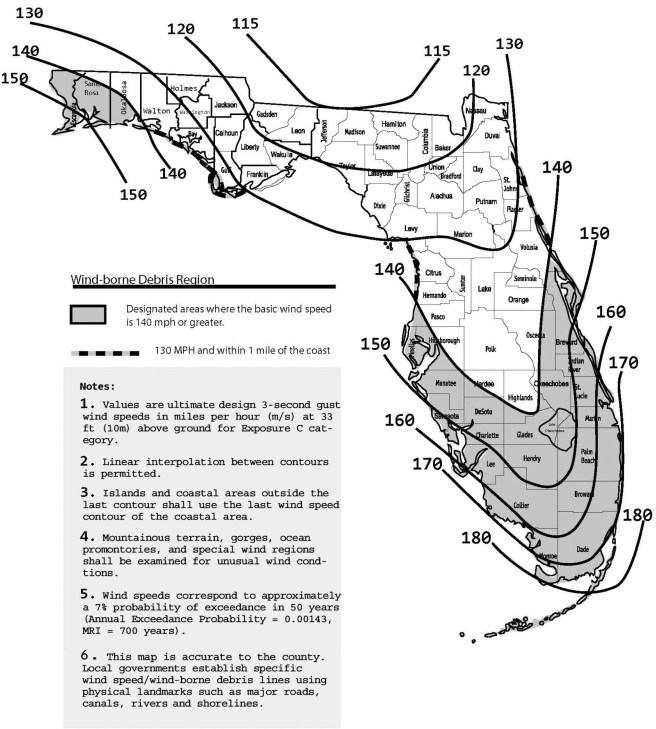
Imagine the city of Miami deciding that eliminating local hurricanes would benefit its local real estate market. They invest in a fleet of hurricane blockers to be deployed off their coast during hurricane season to reduce the odds of getting hit by any hurricane, and almost guarantee no more cat 5 hurricanes. This project is worth it for Miami because it has a dramatic effect on home values and insurance costs... And the world also benefits from the cooling that Miami's hurricane shield produces.
Thank you for this, it connects the dots between the economic value of carbon capture and its price. If it's worth it for a second tier city to spend $X billion on heat mitigation, then it's worth the similar amount to reduce the cause by the corresponding magnitude. There's some net-present-value math to be done, but that's for the CFOs.
I think you're overestimating Miami's budget... sure, there are a lot of wealthy people living there, but that doesn't mean the city itself is that wealthy.
BTW, if sea levels rise, property values in Miami are liable to go down the drain anyway, hurricanes or no hurricanes...
Probably not within the municipal budget of Miami, but Florida has a lot of clout in National Politics dues to the electoral college. Florida is the second largest net recipient of Federal tax dollars (after VA (proximity to DC)). If the cost of hurricane mitigation is less than the cost damages to coastal real estate in Florida then it would still be a good move on balance.
This assumes the demand for property stays the same. Is it likely, once it becomes obvious there's a chance your property will be destroyed by rising sea levels?
I used to think that obviously coastal real estate would plummet in value after a few high profile losses. After this pandemic I no longer think it will happen except very, very slowly. But the beaches will be gone for perhaps centuries, the sand will wash away / get covered in water. Sand does not form in a day. I have seen this in areas of Greece where there were earthquakes decades ago. Not even a hint of a beach remains.
I don't know GP is measuring, but indeed the value at risk in NYC is higher than Miami. But the way they wrote it, they weren't saying that, and there are more properties at risk in Miami.
This assumes that global warming is the problem, but arguably the most pressing aspect of carbon pollution is the acidification of the oceans which this plan would not address. It might make more sense to focus on capturing carbon pollution than to mitigate some of the side effects of rampant carbon pollution.
I think the most sensible use of SRM is to head off positive feedbacks. With increasing temperature, the planet starts emitting greenhouse gases on its own, from permafrost melt, forest fires, etc. We can see it in the geological record, where orbital variations cause a modest initial warming, then CO2 increases a lot and warms the planet several degrees more.
SRM could help prevent that by directly lowering temperature, which means less CO2 released and less ocean acidification. And it buys us time to decarbonize before things all fall apart.
It also turns out that SRM might not even be able to save us if things get really bad. The marine stratocumulus clouds they talk about depend on being able to cool to space (at the top). If you increase CO2 too much, this can no-longer happen, causing a collapse of the cloud system and a large decrease in planetary albedo (and hence warming) [0]. These SRM techniques are no silver bullet.
However, as other have pointed out, this might be able to buy us some time to develop negative emissions technology (which is ultimately the only way out). Hopefully we would use that time wisely.
Why argue global warming is not a massive existential threat? Both are huge problems, we have the resources to begin tackling/experimenting on both areas, so why downplay solutions to either? The sea is expanding in size as it heats, more ice is melting as it heats as well. This will devastate billions of coast-adjacent humans. It's pretty hard to argue against preventing catastrophic sea-level rise, never mind acidification also being a huge problem.
Do you have a source for the argument that acidification is worse than warming? I'm more familiar with the pressing problem of positive feedback effects, like accelerated release of natural stores of carbon and methane.
https://en.m.wikipedia.org/wiki/Climate_change_feedback#:~:t....
There is a moral threat of "with climate management tools, we don't need to act on carbon reduction." I think that is less dangerous than the threat of "we have no validated climate management tools to deal with rapidly accelerated climate change." Ideally, we would research and develop the science and technology of weather control and climate management now so we don't feel compelled to do anything drastic in the near future. For instance, we know that dumping sulfur in the upper atmosphere can cool the earth for <$10b/year. But we don't want to be in that position. Instead, maybe we mandate that all container ships loft saltwater droplets to support cloud formation.
Also, keep in mind that some approaches might be applied locally to protect certain ecosystems rather than aiming for a global effect. E.g., cloud brightening R&D to cool areas with lots of melting permafrost. We should be spending billions on this r&d.
We need time to transition, it's happening. In 20-30 years, we will have a much cleaner global economy, with no coal and minimal oil. But we don't want to have the permafrost melt in the meantime!
I had a nightmare where we tried to bioengineer something to eat the ocean plastics and it was too successful. It ate all plastic but turned the ocean full of algae killing nearly all marine life.
I'm not sure I buy that, but sure, both are important problems.
Question, what do we know about the ocean as a carbon sink? Is it's capture rate variable with anthing? Is it easier to capture carbon from the ocean than in the air? Could we try to increase the capture rate into the ocean and then extract rapidly from the same area?
It's "easier" to capture from water in chemical terms but harder to actually move the water. I think the economy of moving the weight of water makes this a nonstarter.
Also yes, ocean acidification is likely to be the bigger immediate problem. People depend heavily on fish protein and other sealife. That plus poor farming yields will be bad.
I imagine any CO2 capture system that uses ocean water would be placed in the ocean, not have the water pumped into it.
CO2 is easier to chemically react when dissolved into water, and its mobility is about the same as on air. So the decision is about engineering something that can survive being immersed on the ocean vs. engineering something that can use atmospheric CO2. I believe there's no general answer, we can only answer that question for specific designs.
Mechanical and electrical engineering aren’t going to do you enough good quickly enough.
But can you think of any forms of life on the bottom of the food chain that depend on carbon inputs as part of its own metabolic processes in order to reproduce itself? Because if you want a self-sustaining ocean-based carbon capture solution, that’s where I would look.
e.g, instigate some large bloom of plant matter or algae, and engineer/find the right conditions for the matter to sink to the bottom of the ocean without decomposing.
At least the first part. There’s an easy profit motive: increasing the base of the food chain feeds the rest of it, and some of those are products we like to eat.
The second part, if you can find a profit motive to compost the ocean floor and actually do it in a profitable way, then it will get done. Else we’re stuck relying on natural processes.
The problem with GMO life is an organism trying to reproduce plus your goal is inherently less fit than an organism merely trying to reproduce. This really only works at accelerating a reset after a mass die off.
There are some feedback effects to acidification, one of which is that plankton will struggle. They absorb a lot of CO2.
Someone else pointed out that we can cause blooms. That's basically what you want, because plankton or algae sequester it. I don't know that we can "hack" that without risking damaging the oceans though. They're pretty good at what they do as is.
It is a gas exchange though, so heat and pressure have an impact. They're not great for marine life though. Surface area does as well, though it'd be hard to meaningfully change the ocean's surface area.
The bigger issue would be containment. The ocean is huge, and a very good CO2 sink. Anything that's going to make a significant dent in the total CO2 absorption of the ocean is going to have to happen over a very large area. Things aren't going to be much better if we sterilize the ocean in the process.
What concerns me about almost all of the Solar Radiation Management (SRM) proposals is that they don't address the root issue of high Greenhouse Gas (GHG) concentrations.
This means that we would have to continue them indefinitely, forever, without fail. (I'm assuming that we would just use the SRM measures to continue with business as usual, but having seen our progress against GHG emissions so far, that doesn't seem an unfair assumption.)
And should we fail to do so then the protective effect would dissipate leaving us with full solar radiation on a planet with presumably much higher GHG concentrations. This would not only cause temperatures to soar to hitherto unseen heights, but to do so in an incredibly rapid manner.
It's not clear that our ecosystems would be able to withstand such a drastic and sudden change.
>This means that we would have to continue them indefinitely, forever, without fail.
This kind of all or nothing rhetoric is damaging to actual progress. Solutions are not mutually exclusive. We can do both. One treats the symptom and buys us a few decades without having to suffer a 4C air temperature rise (and the billions of needlessly lost lives and indeterminate human suffering). The other fixes it in the long term.
Fairly sure GP wasn't implying it's not possible, but also venting the sentiment (shared by me) that availability of effective mitigation will preclude any actual solution by taking the pressure for change off the societal systems.
The idea people in the SRM research community have go more like that you have declining CO2 emissions, at some point you turn around by deploying negative emissions tech and SRM is basically your "let's cut off the worst effects in times of highest CO2 concentrations". This is e.g. often described by David Keith, who's one of the leading advocates for SRM research.
Whether any of that is feasible or realistic is of course debatable, also whether one should even go down that path and whether even the prospect of doing SRM is blocking faster climate action. (And I sympathize with all those concerns, but I think paiting a wrong picture doesn't help.)
The issue is I don't think that scenario is realistic.
We don't have declining global CO2 emissions and there are no signs we will have that any time soon. In fact, annual CO2 emissions continue to increase at an almost exponential rate.
So first of all we'd have to decrease emissions and invent and deploy some CO2 extraction tech to help lower the current atmospheric CO2 concentration.
To me, it seems far more likely that if SRM was deployed many would just see it as a way to continue with business as usual without having to suffer the effects of global warming.
Are you assuming we'd only use SRM and not continue the MASSIVE efforts already underway to lower yearly GHG emissions? And once we go zero, we're already seeing dozens of plans and ideas to handle what we've already emitted. Really, our current playbook is in its infancy and climate change is WAY out in front of us already due to our political and economic foot-dragging. I don't think we should nay-say anything nascent until we've found the most scale-able, economically viable solutions.
If we go into the 2030's and we are still doing business as usual with our near-exponentially increasing global CO2 emissions then I suspect a large amount of climate damage will already be 'locked in'.
The first chart you posted is global emissions. If you break out Europe and the US, you'll see our emissions-reductions efforts are in fact leveling off emissions, and in some countries reducing them. But globally speaking, China and India have energy impoverishment, they're still ramping up coal to provide lighting, A/C, refrigeration, and things we take for granted. This is expected and we can't fault them for providing basic utilities to their people.
Yeah, we're in pretty huge trouble. I'm definitely cynical in the short-term and medium-term, but I see potential for all these nascent technologies to work over the decades to save our bacon by 2100. Technology got us into this mess, but we're enslaved to our technology now, so we're going to just have to make better and better technology while being slightly more efficient and green-minded as well.
It's not one or the other, as mentioned in the linked article. In any case even if all greenhouse gas emissions stopped today, which is not possible or even desirable, we'd still have a roughly 1.5 degree rise in average global temperature within the next couple decades. So, it's a question of whether we decide to live with the inevitable effects (the beginnings of which we're only starting to see) or do something about it. If the latter, what method balances effectiveness and safety in a scalable way, and marine cloud brightening is one of the best candidates for that.
Taking care of all of the causes is not enough to fix the problem of climate change. If we hit net zero today, it would still continue to warm for decades, which means more deforestation and desertification through fires. Your proposal is far too conservative to avert disaster.
Amd more to the point, it has already been made quite obvious we as a species don't have the will to tackle the cause, so we are left with quick fixes with side effects, or just trying to adapt. It doesn't really matter what the right course of action is (or was really) if no one will do it.
Source? I think we would avert disaster if we got net zero today. We wouldn't avoid change and things would continue to warm as you say. But it wouldn't be the end of civilization, just very inconvenient. In the other hand if we don't stop making the problem worse we will eventually activate feedback loops that can't be stopped and that do end civilization, kill the majority of humans and other species, and make huge parts of the Earth uninhabitable by us.
Source is I am a meteorologist who has studied climatology. The residence time of GHGs ensure that we will have elevated levels for at least a century, even if we do all the nice things like plant trees. The terrestrial biosphere is too small, and not a long-term solution. Here in California, carbon-credit forests are going up in smoke.
We have already committed to levels that I consider catastrophic. Particularly in the oceans, where CO2 partitioning into the oceans is bleaching coral and the habitats they create. In the terrestrial habitats, desertification widespread and rapid.
The long-term solution offered to us by the Earth system is getting carbon below the carbonate compensation depth to be buried, or at least dissolved into the entire ocean, and not just surface waters. But the ocean overturning time is 500 years, and our timescale is somewhat shorter.
I think how you look at catastrophe solely from a perspective of civilization is wrong, but even from the perspective of a state, things like the drought that caused the famine that caused the civil war in Syria which caused a refugee crisis in Europe are troubling. Imagine how much worse it will be when a massive typhoon hits Bangladesh. But from a human perspective people are already suffering loss of income, home, and lifestyle from climate-exacerbated natural disasters. And the biosphere has been hit hard — adaptation will happen, but the mass extinction means we will lose ecosystem services that will be hard to replace.
To be fair, it’s not all positive feedbacks. Ocean acidification is definitely a negative feedback. So too is desertification, which turns dark forest into high albedo grassland and deserts. Clouds are… complicated. Of the positive feedbacks that terrify me, it’s the undersea methane clathrates.
I agree with what you're saying. I think we just differ on what constitutes a disaster.
Given the potential to end civilization, I feel any outcome short of that is a win of some kind. Even if the consequences are still severe. I also have serious doubts that we'll actually remove enough carbon to stay under 1.5 degrees of warming. We may just have to live with the consequences. I definitely don't mean to imply in any way that things will be just like normal. It's going to get rough.
In particular, the figures in chapter 2 are particularly informative.
We are going to need to start sequestering carbon in the later part of this century, with as of yet unknown methods, but it's doable.
I would caution that climate scientists have been generally too conservative in their predictions, and there's substantial risk that they have missed something that could make warming much worse than we expect. (I would consider a 1% chance of much worse warming to be a substantial risk, I purchase insurance for far rarer risks than that.)
Additionally scientists have been overly optimistic about how much and how rationally society responds to the risks.
So in general I would say we are in somewhat worse shape than the SR1.5 report says, but there's no evidence of that, it's just analyzing the situation using standard risk modes rather than getting point estimates and confidence intervals on the best evidence.
1.5 isn't going to happen. I'll be happy if we manage to keep it under 3. There's no guarantee that doesn't trigger a total disaster, but it's possible it would also just be extremely costly, damaging, and inconvenient.
At some level it would be a complete and utter disaster and it's not clear where that is. I think if we could magically reach net zero tomorrow, we'd be mostly fine. Obviously instead we will continue driving full speed towards the edge of the cliff, hidden somewhere in the darkness. I hope we apply the brakes earnestly and soon.
Anything that I find says the speed of increase has been decreasing almost steadily since 2008, and 2019 had a decrease in total emissions compared to 2018 (and whatever series I find, it never goes beyond 2019).
>We are going to need to start sequestering carbon in the later part of this century, with as of yet unknown methods, but it's doable.
Seems like a good opportunity to kill two birds with one stone here with the climate and housing crises if we just plant trees and turn them into apartments.
I think I'm a relative optimist about global warming because there are a number of possible climate engineering interventions which seem fairly cheap and could plausibly buy us another decade or so.
I can imagine a future where perhaps India or China decides to act on their own to this effect, risks be damned.
All of the "climate engineering interventions" people keep trotting out that don't actually remove carbon from the air end up making things radically, disastrously worse.
We know how to remove carbon from the atmosphere, in bulk, with super-plentiful olivine. Cutting off emissions and deploying olivine works. Almost anything else ends up doing no net good, at best, and funnels us deeper into the hole.
Soluble iron compounds scattered over the open ocean could help. Any way to get the sulfur hexafluoride and HFCs out of the air would be an important contribution, because even getting CO2 content down to pre-industrial level would not be enough; those other manufactured gasses trap heat thousands or tens of thousands of times better than CO2 does, and are already a big part of the Problem.
I have no idea why this has been down-voted. Sure, it's a strong opinion but that's what HN is all about.
Couple of questions:
- Do we have any estimates yet on how long olivine would take to be effective?
- Can we do HFC-capture in a similar way to carbon capture? Would this be more productive?
The CO2 capture capacity of olivine is well understood. You just need to get enough of it out there, wet, stirred, and exposed to air or surface water, i.e. on beaches. It will take many millions of tons, but we have that, or access to it.
Of course it would do little good if we continued pumping CO2 into the atmosphere at an increasing rate at the same time.
Getting the SF6 out of the atmosphere is a tougher nut. The present load already accounts for 10% of forcing. There are current efforts to phase out its use, and suck it out of the equipment it is used in.
The HFCs in current use, if all vented, would have as strong an effect as all the CO2 currently in the atmosphere. Collecting it all up and destroying it is a huge responsibility. Probably most that is in cars, window A/C units, and refrigerators will end up vented.
> those other manufactured gasses trap heat thousands or tens of thousands of times better than CO2 does, and are already a big part of the Problem.
If by big you mean 1/5 of the problem, ok. But that is really not big enough to remove the focus from the other 4/5 And the way those gases work on the long term, in that the amount of them on the atmosphere is proportional to the speed of emission, instead of total emissions makes any change of focus from CO2 actually harmful to solving the problem.
And by the way, half of the non-CO2 emissions are methane, that comes mostly from fossil fuels mining and handling, and 2/3 of the rest are nitrous oxides, that comes almost entirely from fossil fuel burning. So "big" is really, really pushing it.
Big, meaning that even eliminating all of the excess CO2, would not get us back to the pre-industrial heat-forcing condition. We have reasons not to want to take CO2 concentration below that point, but to want forcing to reach that point.
Just getting the excess CO2 out is a big enough job, and one responsive enough to known practical measures, that it leaves some time for research on the tails, if we start now.
Nothing about this unfolding disaster is small, or about any measure to counter it.
> Big, meaning that even eliminating all of the excess CO2
Well, it gets you >87% of the way, and stabilizes there as long as emissions do not grow. Where going to 97% depends on lots of changes on agriculture, and only the last 3% is about the gases you cite.
Of course, for 100% you will need to cure all the causes. But "87% solved and not getting any worse" does really not sound like an emergency. I maintain that changing any focus away from CO2 is a mistake.
It is fortunate that you are not in charge of efforts to replace use of SF6 in current high-voltage electrical equipment; or to phase out HFCs, and to ensure that the HFCs replaced or in decommissioned equipment are destroyed safely. Each person working on those has more effect than any thousand working on carbon. But we also need all those thousands working on carbon.
According to EPA, just three companies release the overwhelming bulk of problem fluorine-containing gases today. It is much easier to get three companies to change what they do than to get tens of thousands in line.
In practice, carbon is such a big problem that a solution will only come very slowly. Anything that can be done more quickly has outsize impact.
Nickel is a concern, but seems not to make the the whole idea untenable.
In particular, the alternative of spreading powdered olivine on cropland will require monitoring. Different sources of olivine have different amounts of nickel and chromium, and the sources with acceptable levels can be favored for that use. Use on beaches and shallows seems to tolerate more. There is no reason to do one but not the other, and dozens of other measures besides.
I'm extremely sceptical that climate engineering is gonna help: Mitigating continued CO2 emissions is VASTLY more expensive than reducing emissions themselves (in every scenario I've seen so far), and we had 4 decades (!!) to do anything about the emissions but nothing happened.
I see no reason to assume that governments are suddenly going to spend significant parts of GDP on climate engineering if they could not be arsed to spend a tiny fraction of that on mitigation so far :(
You're right from a financial standpoint, but I wonder if from a psychological standpoint, it is easier for humans to start doing something new than it is to stop doing something they have been doing for a long time?
Exactly, this is why wearing masks and getting vaccinated worked so effectively at curbing the pandemic. People didn't want to change their way of life. Stopping the pandemic would have required an extreme economic shut down in April, far more extreme than what we saw. Sure this economic hit would be much less than the long run impact of pandemic never really going away, but it was too much for people.
So they all agreed that wearing maskings in public and private gathering, plus universal adoption of the vaccine would be the easier, if not ultimately more expensive path.
While the pandemic did stick around for a bit, by spring it was basically gone. Now when I go out I see people in packed clubs, happily drinking and dancing mask free.
Sure by comparison universal mask adoption and vaccination is to climate mitigation like building a lego castle is to building the pyramids by hand, but since we solved that problem so effectively I'm extremely optimistic about how we're going to tackle climate change.
We showed that we can solve pandemic without effecting the economy or our lifestyles, and we can just as easily to the same for climate change.
This an extremely alarming comparison, because western nationstates basically observed people dying in Asia in spite of massive (chinese) mitigation efforts and did not do SHIT (for months!) before the pandemic arrived at their homes.
With climate change, once we really start to feel the symptoms it might well be too late to change the trajectory and we might suffer the effects for millenia...
The immediacy of a threat is directly proportional to the willingness and resources allocated to tackle it. 40 years ago, no politician was willing to bank their mandate on starting to tackle a problem that was (mistakenly) thought to be a century in the future. This is starting to change.
Take COVID. Every government knew it could happen, and the damages to the economy (i.e. cost) it could have, yet none of the countries in the West did anything to prepare for it, and had to foot a much bigger bill in the end than say Taiwan or Japan. Again, because the threat was elusive and didn't feel immediate.
I'm not too worried about warming for the same reason. I am still worried about increased CO2 levels and their health effects. Either we figure out a carbon neutral energy solution(efficiency gains + mass solar and/or fusion) or I think we're screwed(), at least as far as our modern standard of living goes.
- Humans and the earth will survive in any case, just not in our current form.
If you're interested, the book "The Ministry for the Future" from "Kim Stanley Robinson" (who also wrote the Red Mars trilogy) talks about that. It's really interesting to read
Was reading about food and economic disaster in Sri Lanka and how much of their problems would be solved with cheap coal electric and fertilizer plants. If we had an easy way to counter global warming, maybe countries could more easily borrow funds for such projects.
I'm quite optimistic about this too. Sure, we have to reduce our impact on the climate and be responsible about it, but even in the worst case scenario, I'm confident that we'll just find a way to deal with it.
The current apocalyptic scenarios we see on the medias is too extreme and pessimistic.
"If the Earth can't support seven billion people, then all seven billion of us just have to figure out a way! That's how science works!"
> The current apocalyptic scenarios we see on the medias is too extreme and pessimistic
Source? If anything, scientists have been too conservative in their warnings. Time and time again, we see that climate change is going _much_ faster than we anticipated.
The models climate science is based on don't say that climate change is going much faster than expected. We're at about 1.2°C right now with with a current rate of 0.18°C per decade. This last IPCC report puts us in the expected warming range between 2.4°C and 4°C by the end of the century.
We’ve spent so long fantasising about living on inhospitable planets it’s not too much of a leap to imagine earth as one. Ala planet of the apes [spoiler alert] though, could a time traveller end up on earth in the future and mistake it for an alien planet?
Could we do this with 7 billion people though? Will my children make it to this world? That’s what keeps me up at night.
you should share your optimism with the million(s) starving in Africa due to extreme drought. also don't forget to put the IPCC in copy, i'm sure the scientists that devoted their life on the subject are interested on your views.
Typically I can't find any reliable stats on the spot, but I recall the reduction in photosynthesis from ordinary heavy cloud cover alone can be up to 85% - with most photosynthesis happening whilst there is only light (or even no) cloud cover.
Probably this would have minimal effect on light cloud cover and there is already not a great deal happening during heavy cloud.
Precisely.
A plant is unable to perform to its full potential unless it is raised in an enclosed environment with supplemental CO2 at the ideal temperature and with adequate light and water.
Plants outside never have enough carbon dioxide, though they often have more than they need of the other factors.
Most species experience fertilization effect from CO2 all the way to 1000+ PPM, some to 2000PPM. Higher CO2 concentration reduces the loss of water, since the stomata don't need to be open as long.
Just plankton and algae and the largest ecosystem on the planet, right? There's always a gotcha, because nature is a chaotic, complex system that is mathematically impossible to account for all the consequences of exercising leverage.
I did think of that, but then also thought that since oceanic plant life move around with currents, they wouldn't be deprived of sunlight all the time. But yes, as you point out, nobody knows all the consequences. It sounds like they're actually doing research and experiments to validate their idea, so whatever model they use will hopefully take these kinds of secondary and tertiary effects into account.
"Scientists estimate that 50-80% of the oxygen production on Earth comes from the ocean. The majority of this production is from oceanic plankton — drifting plants, algae, and some bacteria that can photosynthesize"
Not true at all. Most plants can use additional carbon all the way to 1000+ PPM. Some all the way to 2000PPM.
Quotes below, sources below that:
- CO2 increased leaf area, water use efficiency, and harvest index (in tomatoes) [1]
- Optimal levels for tomatoes may be 2 to 5 times the normal atmospheric levels (1000 to 1500 ppm CO2 versus ambient levels of 350 ppm) [2]
- Combining increases in CO2 with fertilization and irrigation could greatly enhance leaf area which when coupled to observed increases in net photosynthesis as a result of elevated CO2 could greatly increase productivity of loblolly pine trees. [3]
- demonstrating an optimal CO2 concentration of 889.6, 909.4, and 894.2 ppm for aboveground, belowground, and total biomass, respectively, and 967.8 ppm for leaf photosynthesis (in winter wheat) [4]
Elevated CO2 concentration favors plants with C3 pathway, because they appeared when CO2 ppm was much higher, than today. Plants with more recent C4 pathway (evolved around 25 million years ago), do not respond as much to CO2.
For reference, corn (maize) is C4. And sugar cane.
High-fructose corn syrup and cane sugar happen to represent the greatest public health disaster since smallpox was eradicated and smoking started down.
Ha, "brighten clouds". The clouds would be brighter for the ten lucky occupants of the ISS. For the rest of us, this would more aptly be called "sky darkening".
The nice property of marine cloud brightening is that its effect goes away within weeks once you stop doing it. So if it turns out to have unexpected and unwanted side effects, we could just stop.
I know you're joking, but your comment inspires me to imagine a blanket of orbiting solar panels that simultaneously generate a lot of electricity, and also shade the Earth. One can dream!
While it's a carbon neutral-ish way (except launch options and production of the satellites) to get power, the energy that the solar panels beam down is going to heat up the Earth as well.
The better the efficiency of the solar panels, the worse the shadowing effect. Even worse, the solar array in orbit also reflects heat back at Earth! If the size of the array is significant enough to shadow Earth from the sun, it's obviously significant enough to impact this flipside of the balance of radiative transfer. Keeping it on the day side always would offset that ... maybe - but for that it would have to be in solar orbit.
Any energy you transfer to Earth (fusion reactors in orbit, off-planet solar arrays, whatever) is part of it, the form of energy does not matter much, almost all of it is heat in the end and affects the thermodynamic equilibrium of the planet.
As an exaggerated example, if you put a giant solar array into solar orbit and beamed the converted power to Earth, it's like Earth suddenly having a larger surface but just for receiving solar radiation. For the purposes of Earth radiating heat back into space, the solar array does nothing.
Sure, the effects wouldn't be multiplied as with an atmosphere with too many far IR-scattering molecules that we have now but the power wouldn't come for free.
You don't have to take all of it. If you can either vent off energy in a harmless direction or decide to reflect a significant portion back at the sun, it's not a problem.
Besides, whatever the power conversion technology is, it's unlikely to be anywhere near 100% efficient. That means you need to be getting rid of thermal energy in large quantities anyway. As long as you're at least pointing that away from Earth, it's a win.
So we turn off power plants, stop manufacturing, and people all over the world stop driving, shipping, farming and flying with anything that emits C02. What do you suppose happens after that?
The US has been spending a couple hundred million dollars per day on the war in Afghanistan alone for the last 20 years. No one even noticed.
If the US put its mind to it (WWII levels of mobilization), it could probably achieve full renewable electrical conversion (all fossil fuel infrastructure obsoleted and removed) within five years or so.
There are 300 million people in the US, so "A couple hundred million dollars per day" is less than 1 dollar per person, per day. At $1 per person per day, it would take a lot of days to convert everyone to full renewable.
Stanley wrote on his greenhouse gas powered device from the comfort of his greenhouse gas powered office environment at his greenhouse gas powered employer that his favorite greenhouse gas powered transportation vehicle had brought him to, while slacking of from his day job which was to significantly increased the life quality of millions of people while emitting greenhouse gases.
I think you’ve found a great solution. Unfortunately it only works for spherical cows in a vacuum.
Sure, everyone reading and responding to this did profit from CO2 emissions for sure, but reducing emissions without going back to the stone-age is perfectly possible and this should be clear to anyone:
We could simply start taxing Co2 emissions, which would boost renewable energy buildout INSTANTLY:
One example: Right now, electricity (and concrete) are DIRT cheap-- my electricity bill is a complete joke compared to e.g. groceries (or mobile data, even).
Significant electricity costs (like 1$/kwh) would definitely help reduce emissions, and this could easily be done in a way that would not completely ruin the poorer half of the population by moving other taxes correspondingly.
This is just not done because people (and their governments) simply don't care enough (still!).
I'm sorry to be this blunt but you're completely out of touch with reality.
In the whole of Europe electricity prices are currently through the roof, marking records on many countries... daily. [edit: mostly because CO2 emission taxes and because gas producing countries can charge whatever they want because the whole continent (but France) depends on them] Just because people (normal everyday working-class) people pay higher prices everyday for what they need to live, electricity doesn't come from cleaner sources suddenly; and it sure won't in the short/medium term. We are decarbonizing but in the meantime we have to use gas; the other alternatives (eg: nuclear, which is currently the only solution) are expensive as f* and take a looong time to be build. Renewables are not constant and there lies the problem, they also need a lot of ground allotted to be installed and account for a reasonable part of a country's usage.
We're stuck deep and there's no easy or quick way out. It also isn't "people just don't want to", people can't. Electric cars are very expensive to be adopted massively, and if they were comomn, the energy wouldn't be clean anyway, we have to change the infrastucture. Where do you suggest we get the energy from?
> In the whole of Europe electricity prices are currently through the roof
If by "through the roof" you mean like 30cents/kWh, then thats exactly what I'm talking about: if you don't have a farm of bitcoin miners at home your electricity bill is bound to be a complete joke compared to groceries, rent or even mobile data.
If we had actually expensive electricity (and car fuel and concrete etc.), which could easily be compensated by e.g. income or even sales tax modifications, then people would have ACTUAL financial incentive to buy efficient fridges or bike to work (without any additional burden).
It would already have a significant impact if people stopped (most likely against their own will) buying anything they don't really need. Brainless consumerism, buying material stuff simply because it makes you feel good for a while should be stopped through global government intervention.
The amount of clothes, electronics, food and such that gets wasted is just enormous on our societies. Only places in the world where people live somewhat ecologically are those where they simply can't afford such waste. So, IMO everything that isn't a basic necessity should be made much more expensive to force people rethink their consumption habits.
Uhhhh, no. What about electricity that goes into mining and manufacturing? If you raise the price of that, all goods become more expensive, from the simple Mars bar up to construction. The poor will be decimated.
> If you raise the price of that, all goods become more expensive, from the simple Mars bar up to construction.
You can just change e.g. income tax accordingly so expected tax load stays the same-- only now your citizens are financially incentivized to save electricity...
Also you have a convenient excuse (as nation state) for protectionist import tariffs hitting all countries that don't practise Co2 taxation themselves (which might be nice for local economy)
All these half assed solutions perpetuate the idea that we can stay on our exponential quest for growth/energy and just find "solutions" later.
Climate change is only a small part of the equation; pollution, deforestation, destruction of biodiversity, &c. are all equally problematic. As long as we produce and consume more and more we won't get away from the inevitable.
At some point we'll run out of half assed solutions and we'll have to face the consequences. So yeah, make the clouds brighter and paint the rooftops of buildings white, I'm sure it'll help a loooot.
If your house is on fire and you use an ice cube to cool your neck it'll feel good for a bit too, but you would achieve nothing, or even worse, you'd be under the impression of doing something while losing precious time.
We know what the right solutions are, but doing the right things is hard, hence we focus on meaningless half assed solution which are, in the end, only aggravating the situation. Notice how all these solutions always are about adding things to the system, never about slowing down, using less, producing less.
At the end of the day every single metric point to the fact that we're fucking up big time and that our slow incremental half assed solutions are nowhere near enough. The best case scenarios of our best current solutions are still not enough, and we're never meeting our own "not enough" goals.
You don't fix a problem by fixing it's final symptoms
once the global climate gets sufficiently inconvenient we will definitely figure out a way of regulating ocean albedo via microorganisms or micromachines or something similar. human ingenuity will find a way. yes it might be a bit messy for a while...
I'm pretty sure this is a plot point in the Mistborn trilogy
[spoiler]
the planet is getting hot because the all-powerful entity messed up, so it makes big clouds, which in turn kill all the plants, so he makes all plants able to run with less light ..
Engineers think of Earth as an automaton, while it is a living being, the day we start seeing Earth as a living being with living organs is the day we will get in phase with its needs which are ultimately ours.
Treating the symptoms, no matter how clever, isn't going to cure the disease. But it might give us enough time to actually get to the cure.
I always wondered how large a satellite we would need at the ideal spot between the earth and the sun to block a portion of the sunlight in order to cool the planet down a few degrees.
Not that it would solve humans being a cancer to the planet, but it would give us a few hundred years to get to a solution before billions of us find ourselves in some sort of post-apocalyptic world.


B.jpg)
Imagine the city of Miami deciding that eliminating local hurricanes would benefit its local real estate market. They invest in a fleet of hurricane blockers to be deployed off their coast during hurricane season to reduce the odds of getting hit by any hurricane, and almost guarantee no more cat 5 hurricanes. This project is worth it for Miami because it has a dramatic effect on home values and insurance costs... And the world also benefits from the cooling that Miami's hurricane shield produces.