And many people sweating blood and tears to save endemic fishes like the Bonytail, the razorback sucker, the Colorado Pikeminnow, the four Ambystoma species of tiger salamanders, the California Red-legged frog, the Giant and San Francisco Gartersnakes, the California Ridgway's rail. Without talking of the endangered freshwater clams, snails and crustaceans of California.
This man is not a hero. Feral ferrets would treat tens of species of endangered animals of California. They even maybe could block an hypothetical future reintroduction of the American polecat (unlikely, as is a pairie dog specialized hunter from Central US, but not impossible as is one of the most endangered mammals of US).
All this effort could be destroyed for the lack of vision of one single man and the "but is so cute" trap. Nature is too important to be left to the caprices of pet owners.
> Feral ferrets would treat tens of species of endangered animals of California.
They die at temperatures that are a sustained sub-65 degrees or sustained 100+ degrees (which you can demonstrate with a live ferret, although I wouldn't recommend it).
The blackfooted ferret (endangered) is native to California. The claim that domestic sable ferrets would be invasive is ridiculous on it's face.
> Nature is too important to be left to the caprices of pet owners.
The CA fish and game commission is completely ideologically captured as they do not want to engage in any sort of scientific study for the non-existence of existing process (beyond a simple decree) or legal jeopardy that they may become embroiled in, after the fact. They much rather enjoy their salaries mediating the relatively safe cases of licensing and managing bureaucratic rules around existing fish and game.
There's also the uncomfortable truth that people do possess ferrets in CA. Pet stores stock goods for them and vets treat them. People all around CA let their ferrets roam outside and come back in when it gets colder at night (and to get food/water). Young adult/College dorms and apartments are rife with ferret owners. Again, the claims about ferrets being a "potentially" invasive species are specious, at best.
The European polecat (same species as the domestic ferret), inhabits a territory that goes from Finland to Spain. They live in western Russia and also in Morocco. They are adapted to a wide range of temperatures and climates. If you think that an animal living in Moscow can't survive temperatures below 18 Celsius, well, think again.
In particular they feel pretty at home in the Mediterranean, so would survive perfectly in the Mediterranean weather of California as long as they find something to eat. There is little doubt about it.
And, as is close genetically to the American polecat, and as ferrets need to breed when in heat, there is a danger of genetic contamination or displacement of the ultra-rare American polecat.
I agree that most mammals will boil and turn delicious at 100 degrees
> If you think that an animal living in Moscow can't survive snow, well, think again
I happen to have lots of experience seeing people who have frozen their ferrets, rabbits, hamsters, rats, mice, possums, etc to death. Domesticated ferrets aren't stupid, but they also aren't very good burrowers. Other than finding a nice gopher hole, in the 80s and 90s, a domestic ferret froze to death (still floppy, not solid) outside. Now CA is so hot, they would probably survive pretty well but then die to dehydration and heat in the day even with a burrow.
The problem with animalism is that it has a big, big, blind spot. They see individuals named Harry and Rex, is all that they can see. They are blind to the relationships, the consequences, the animals that aren't cute, and refuse to see the big picture.
But individuals don't matter.
Not for the science of ecology. Not for nature. Is the population and ecosystem what matters.
Individuals in a population die all the time. They freeze, starve or are predated each single night. It doesn't matter.
It doesn't matter if 980 of each 1000 released ferrets die before an hour.
While I agree, the problem is that the Black footed ferret already is endangered AND the legal ferrets have not crept into the ecosystem from beyond the arbitrary lines humans have drawn. So at both the micro and macro perspectives, you have no explosion of population.
Taking a large population of ferrets and putting them in some California farmland and see them die off might be what your conscience requires as "proper evidence", but it's ironically illegal to even perform the test. Much like the CA F&G, it's an ideological problem, not an evidence based one for you.
> People all around CA let their ferrets roam outside and come back in when it gets colder at night (and to get food/water)
Do you mean 'roam' within extremely ferret-proofed yards? Ferrets famously lack a homing instinct and are not likely to find a way home after wandering off, if left outside unsupervised.
> Ferrets famously lack a homing instinct and are not likely to find a way home after wandering off, if left outside unsupervised.
It's common enough that I have incidentally been in the homes of owners, with the glass sliding doors open, where the ferret pet is allowed (and expected) to come back in from a wire fenced yard or open yard^. I've also visited the homes where inhabitants had indoor-only ferrets as well (about 1 of 20 ferrets were allowed out).
My experiences are from the late 90s dorms and apartments ranging Cal State Irvine to Cal State Berkeley. This may be relevant somehow.
^Rabbits (even big lop-eared) that are allowed to roam are the ones who need an enclosed yard, for sure.
I was just thinking about the last paragraph. I honestly didn’t know they were illegal in CA, since I had so many friends that owned them growing up (inland southern CA). They bought food at the pet store, brought them in for show and tell, etc. They didn’t hide it at all.
1. Wouldn't requiring ferrets (aside from the limited number needed for breeding) to be spayed or neutered greatly reduce this risk?
2. Don't feral cats and dogs also pose a threat to ecosystems? Why should the threat to endangered species necessarily outweigh the significant psychological benefits of pet ownership?
3. Couldn't feral ferrets from one of the many states where they are already legal easily make their way into California anyway?
4. Since many people violate the ferret ban anyway, wouldn't legalizing and regulating the keeping of ferrets result in more responsible ferret ownership?
1. Neutered animals still hunt, one single racoon released in a small Spanish Island by idiots almost wiped the entire colony of an endangered marine bird in two years.
2. One problem does not exclude the other. Ferrets live in freshwater systems. Can swim and eat amphibians, fishes and molluscs. They know how to manage toads to remove the poison glands and then eat the toad entire. Feral cats don't like frogs, and avoid entering in water unless necessary. Cats favor to live near humans and are quickly extirpated from wild areas with raptors. Ferrets instead, dive into crevices and rocks, remain hidden and are much more hard to hunt.
3. They could and they should be eliminated if you want to save the Californian fauna. In any case "I want to be allowed to violate the law in my state, because the other states don't care and is free for all there" is a false dichotomy.
4. Not. You would just increase the number of ferrets and the probability of escape. To start, entire litters would be released by the animalist crew (100% of probability if the species is legally allowed to breed). Moreover, ferrets aren't dogs, they enter in each hole of crevice that see, and need to investigate it, even for days. They will not return to you when you call them so (unlike cats and dogs), if you let your pet play in the garden alone for one minute, you will lose it. Entire females in heat are an "hormonal bomb" they either mate or die by stress if let alone. This mean that they travel a lot in search of a male.
> They will not return to you when you call them so (unlike cats and dogs),
Ferrets can be recall trained using literally the exact same methods as one uses for cats and dogs. They learn the same way.
> if you let your pet play in the garden alone for one minute, you will lose it.
Yeah, this kind of thing likely surprises a lot of new ferret owners. People I've seen who are serious about caring for their ferrets never leave them unsupervised outdoors, ever. Leashes, backpacks, and fully enclosed structures (like 'catios') are popular tools. Even supervised outdoor play requires a lot of preparation and vigilance.
I think we may be in agreement about the potential risks of ferret legalization, even if we disagree about the likelihood of the worst case scenario.
But regardless, you need to weigh those risks against the enjoyment and psychological benefit that owners derive from pet ferrets, just like with pets of any other species.
> But regardless, you need to weigh those risks against the enjoyment and psychological benefit that owners derive from pet ferrets, just like with pets of any other species.
This almost sounds like satire. You can't have a ferret. Dad said so. Go play with something else.
Right. It's such a tiring method of argument -- "You can't do anything until you exhaustively quantify the plusses and minuses." Some things are self-evidently bad ideas with potential costs so large and "benefits" so imperceptible that they can be safely ignored out of hand.
Sorry man, you don't get to have ferrets. You also can't own a cheetah or a chimpanzee. Get a hamster, cat, dog, tarantula, python, goat, chicken, alpaca, chinchilla, fish, parakeet or one of the dozens of other options.
> It's such a tiring method of argument -- "You can't do anything until you exhaustively quantify the plusses and minuses."
It takes like ten seconds to go over the benefits of ferrets. Why be lazy? I don't think it's a bad idea to briefly weigh both sides in just about every situation.
> But regardless, you need to weigh those risks against the enjoyment and psychological benefit that owners derive from pet ferrets, just like with pets of any other species.
What's the unique psychological benefit that owners get from a ferret that they wouldn't be able to get from a cat, dog or any of the numerous already legal pets?
Ferrets are, like dogs, heavily play-focused animals. For people who can't own a dog-sized animal, ferrets are an excellent choice for active pet owners. Your rabbit or guinea pig is literally going to sit there, eat, and poop. Ferrets are one of the only small pets you can really actually play with.
I think they're extremely good pets for kids, because they're friendly, active, (relatively) robust and much less likely to cause harm to a kid than a larger animal like a dog.
A few years ago someone in the UK put an electric net over their vegetable patch, probably to stop cats. Long story short a cat was killed by said electric net. He was prosecuted but only got a fine of £60 or something. I suspect he might have felt that was good value to eliminate the cat shit from his veggies.
We used to have a bantam chicken and we'd regularly see the neighbor's cat sprinting through our garden being chased around by a small, bite-size chicken.
The cat would regularly terrorize the larger chickens, but it knew not to fuck with the little guy.
Cats definitely. I've seen outdoor cats kill many birds, and have even come across house cats out on hiking trails. What do dogs do to native wildlife though? I've never seen this argument made before. Wild dog packs are very rare, and usually taken care of since they're dangerous. Ferrel cats aren't all that different from house cats, and can be found everywhere.
But regardless, you need to weigh those risks against the enjoyment and psychological benefit that owners derive from pet ferrets, just like with pets of any other species.
I need do no such thing, especially when the argument is one logical step away from "but ma freedumbs!". Or whataboutism, I haven't decided. But "yeah, we might lose an endangered species or two, but what about my needs?" is what I'm reading here.
Checked. I stand corrected. It was a few months, not two years and the seabird was not an endangered species globally (but can be locally).
It happened in the National park of Timanfaya almost twenty years ago. At the end of June-2003, a trail of depredated corpses of Scopoli's shearwaters started to appear.
The area is dry and the invisible predator left no traces and almost no faeces to examine. The National Park staff suspected a ferret as main candidate. Dogs, cats or even badgers were also in the list, some camera traps were set and eventually show a racoon.
Until caught at the end of the summer, the final "bodycount" was 100 shearwaters killed (plus the orphaned chicks unable to survive without the parents). This just by one single racoon in a single summer. The animal was tame, not afraid of people and was clearly a released pet. If it hadn't happened in a national park no one would have bothered to hunt it.
I only found a link in Spanish, you can use google translate if you are curious about the details.
"Wild" North American raccoons here in their native range are also completely unafraid of people. Or even dogs. At least in urban areas. They basically "know" that they can't really be messed with, because it's not typically legal to shoot them, they have nasty teeth and claws, and they're ridiculously smart.
You aren't joking about them being unafraid of people. I was sitting out on my back deck one evening here in $RELATIVELY_BIG_CITY and had two adolescent racoons approach me and start engaging in playful behavior. One of them even ran up and snagged the slipper off my foot before I protested and it dropped it and ran away.
A couple of housecats multiplied and wiped out a bunch of native species on California's San Clemente island a while back. A friend of mine was a contractor doing work for the Navy on that island (it's USG property) and told me stories about how some of the other folks stationed there would grab a shotgun and Jeep and go cat huntin'
Different cases and different places. Mallorca Island is located south of France. Lanzarote Island is located to the west of the Sahara.
The Mediterranean Islands had pygmy elephants, endemic goats, bunny like rodents with short ears and forests with many trees that were extinct long time ago. All fauna now is similar to the continent, and seabirds know since long time ago that there are small carnivores roaming; and that some places are safe to nest and other not.
Canary islands have their own biodiversity area and remained much more isolated with no native wild carnivore predators.
>one single racoon released in a small Spanish Island
Island fauna are uniquely ignorant of threats. On some islands, birds will literally walk right up to humans — a huge, mean apex predator. The situation in California is not reasonably comparable.
Don't feral cats and dogs also pose a threat to ecosystems?
Yes. Cats in particular are a disaster. Ecologists have been trying to figure out how to effectively control feral populations and convince people to stop letting domestic cats outdoors for decades.
"It's already a disaster so what's the harm in making it a whole lot worse" is not the most compelling argument.
> Don't feral cats and dogs also pose a threat to ecosystems?
Yes, but that doesn't mean we should make it worse.
> Why should the threat to endangered species necessarily outweigh the significant psychological benefits of pet ownership?
Because ecosystem collapse could kill us or at the very least be very expensive in the long run. We're not gods, so we depend on the ecosystem working.
> Couldn't feral ferrets from one of the many states where they are already legal easily make their way into California anyway?
Maybe, but that doesn't mean we should make it worse.
Has this happened in the 48 states (all but California and Hawaii) where ferrets are not banned? How about Canada where they appear to be legal in all provinces?
All I've been able to find on this is the paper "Environmental Impact and Relative Invasiveness of Free-Roaming Domestic Carnivores—a North American Survey of Governmental Agencies" [1] which looked at the impact of non-native domestic carnivores (dogs, cats, and ferrets) in the US and Canada.
It says this in the discussion section:
> Aside from an occasional “stray”, there were no reports of “feral (breeding)” ferrets; nor were there reports that of “free-living”, or “naturalized” ferrets anywhere in the continental United States or Canada, including California. More importantly, no jurisdiction reported ferrets impacting local (native) wildlife, including ground-nesting birds, or threatened, endangered and sensitive species.
Edit: this comment seems quite controversial. In a few minutes it got several up votes, then quickly got twice as many down votes, then quickly returned to about even. I'm quite confused by this.
The idea domesticated ferrets would escape, breed, and threaten wildlife if one of the most hilarious concepts I've ever seen, starting with the fact that getting a ferret that isn't already spayed or neutered is basically impossible, and ending with the fact that domestic ferrets tend to get fat, are lazy, and especially in the case of one of my previous ferrets, remarkably dumb.
Of a dozen ferrets I've had in my life, I can think of one that might be able to find and capture food well enough to survive on his own. And he couldn't reproduce.
It's absolutely shocking to me still that California has this weird villainous perception of these basically elongated rabbits.
Ferrets specifically released in large quantity over many years to breed in the wild and threaten wildlife, which is the case in New Zealand (they were trying to get rid of the rabbits), is hardly comparable to pet ferrets which are mostly incapable of breeding and which usually don't survive long if they do get into the wild.
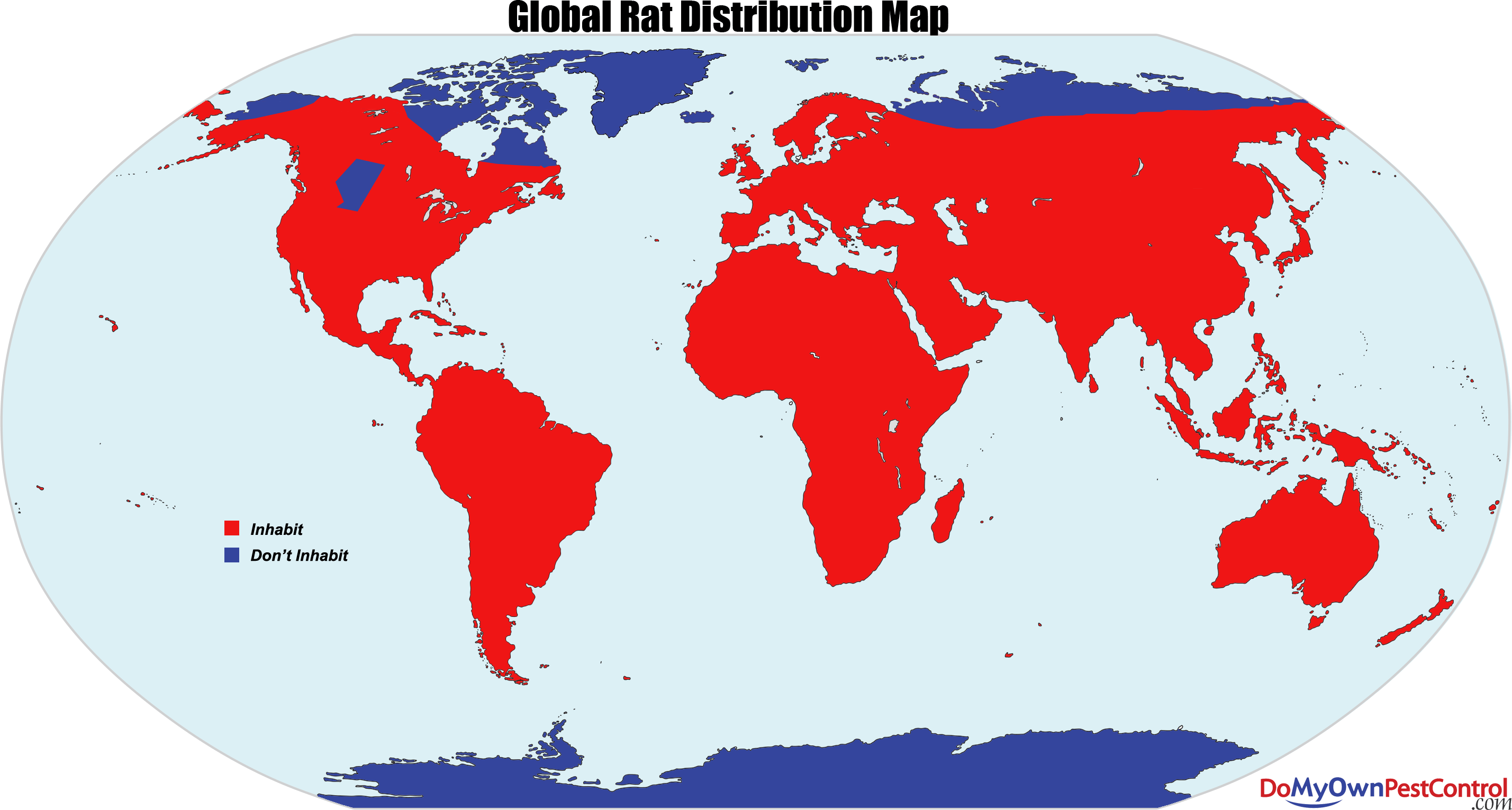
Rats are illegal in Alberta, and it is one of the few populated areas of the world without rats. Of course, the ban was put into place before the province was over-run with them, and an aggressive rat-killing program was put into place along it's eastern border with Manitoba to stop them migrating any further.
"Edit: this comment seems quite controversial. ..."
You're not alone, I watched votes on my various comments on this matter oscillate in both directions then settle near one or zero. I thought my comments rather mild and I wasn't deliberately trying to stir up controversy.
A while back I also encountered this sensitivity and tetchiness when discussing veganism. Seems some people consider such subjects verboten and should not be discussed on the internet.
Re your 'Edit' comment again, update to my earlier reply. Well, same has happened to me again. It would be interesting to know why so many people get angry at relatively neutral comment and won't say why in open debate (especially so on HN): https://news.ycombinator.com/item?id=31957321#31957871
It's highly unlikely, given that released/escaped pet ferrets can't breed. Ferrets purchased for the pet trade are all sterilized as a ferret in heat doesn't end well.
Females can die if they go into heat and don't have a mate to breed with, and male ferrets can get very hostile around a female in heat.
Most places have a variety of animals such as rabbits and mice and rats in sufficient numbers that a few getting eaten by the rare escaped domestic ferrets won't impact the population of those animals.
Pet ferrets usually don't last long if they escape and almost always are fixed so they cannot breed. They aren't likely to spread very far from where they escaped, and so the wild animals they might kill are going to almost all be the kind of animals that thrive around humans.
Allowing ferrets might even be a net positive for the local native species, because some people who would have gotten a cat might instead choose a ferret, and an escaped ferret would likely do much less damage than an escaped cat (and that's not even taking into account that many people regularly let their cats roam free outside, which I don't think many ferret owners do).
Citation needed. Where in the other 49 states is this scourge of feral ferrets?
Domesticated ferrets are to known to die fairly quickly if they escape to the wild. They have no hunting instincts. If you are worried about feral animals, why would you allow cats but not ferrets?
There are also tons of people in California who already own ferrets illegally (one of my friends growing up did) and yet there's no feral ferret problem in California. Meanwhile there are now feral parrot populations (descended from escaped pets) in my hometown near San Diego that weren't there 15 years ago, and I haven't heard anyone talk about banning parrots for that reason.
It's really rare for an escaped "pet ferret" population to boom on it's own, since most ferrets purchased in the pet trade (i.e. not specifically purchased for breeding) are already spayed/neutered. This isn't the case for most other pet species.
IIRC, this is done because female ferrets who go into heat can/do die if they don't mate and male ferrets will become quite hostile when near a female in heat.
>>Nature is too important to be left to the caprices of pet owners.
I agree - read up on what is going on in the everglades with the explosion of huge pythons (many were former pets released into the wild) - they have already killed of something like 99% of the small mammals in the everglades, and they are not even close to containing the problem yet.
The isn't happening with ferrets. Ferrets have been legal in other States for many many year (over 30+ years in Virginia for example) and "feral ferrets" is not only not a problem but doesn't happen because they DIE quickly in the wild.
A lot of these "ferret fears" come from ignorance about what happened in New Zealand in the late 1800s / early 1900s. Domestic ferrets were crossbred with European polecats and brought to New Zealand specifically to counter rabbit overpopulation.
They introduced a man made killing machine to run through rabbit populations, and unsurprisingly the hybrid ferrets did the job very well. Now they thrive on the island as an invasive species. All that said, these ferrets are genetically distinct from domesticated ferrets. They are not remotely the same thing.
A domestic ferret in the US would last all of 8 minutes in the wild.
So can you explain how a number of escaped pet-trade ferrets can grow into a force that can threaten an ecosystem when they are unable to increase their population size?
You need to think bigger. There are several ways. Eating all the remaining individuals in a local population of an endangered animal until splitting the species in two isolated areas unable to survive, would be the obvious one.
For example, a professional of ecology would ask him/herself questions like "are the Parvoviruses of asymptomatic ferret pets unable to increase their population size"?
Absence of evidence is not evidence of absence and maybe we are just not looking carefully at it. Or maybe the damage was yet done.
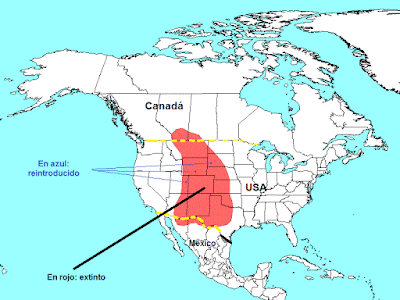
In any case this is the old area of distribution of the American polecat. Is extinct from all the red area. If you look carefully you will spot three tiny blue dots. This is the area with actual wild populations of American polecat, in the entire planet.
> Absence of evidence is not evidence of absence and maybe we are just not looking carefully at it. Or maybe the damage was yet done.
If it existed, then enemies of ferrets like yourself, who go so far as to trot out anecdotes about raccoons halfway across the world, would know after all these decades. And the California state regulators would quickly invoke it in their defense. It doesn't exist because it doesn't exist, not because no one cares or is ignorant.
This whole topic does illustrate the benefit of federalism in serving as 'the laboratories of democracy': if ferrets were banned federally, how would we ever know how absurd and false all your arguments about the vast ecological harms of ferrets were? It would be a case of the seen and the unseen. But with federalism, we can simply look at the other 49 states and roll our eyes at the hyperbole. They aren't perfect natural experiments, but they do fine here.
You would be surprised about how many things we still don't know in Biology.
But we do know a few things... for example that European and American polecats are mammals in the same genus and close genetically.
So close that both are susceptible to the same diseases and in particular to the same viruses. How do I know that? Because I'm interested in pathology of vertebrates.
We know also that the American polecat went extinct, and that diseases played a main role in that. Check the bibliography.
Are you following me?
So when you say that there was "not any measurable effect". Yes, in fact there is a clear perfectly observable effect. The closest carnivore to European polecats went extinct in the wild. Why?
> benefit of federalism in serving as 'the laboratories of democracy':
I refuse to enter in political stupidity molasses. We are talking about nature problems here.
Your comment is wrong. Ferrets have been legal in other States for enough years to have SOME evidence for people that hate ferrets to use. It isn't there because it doesn't happen.
Also, let's not forget, let's not forget, Dude, that keeping wildlife, an amphibious rodent, for uh, domestic, you know, within the city, that aint legal either.
Learned from this that Ferrets are a domesticated species (like dogs and cats). I'd only heard of them in the context of Monty Python and affinity for trouser legs and assumed they were a wild animal.
Also, they're _big_ : we have a kind of Weasel (Ermine) in Montana and I've seen then drag an adult rabbit carcas over long distances. Ferrets look to be around twice their size.
My younger brother had a pet ferret growing up. It wasn't that big. But it had no fear. Our large dog (rhodesian ridgeback X black lab cross) was scared of it. They'd "play" but the dog always backed off.
They only have two modes: sleep and play/hunt. Ours learned to play with us without puncturing our skin, but its play still involving biting and tugging incessantly.
Once a squirrel had gotten into a wall cavity. The ferret knew and paced outside of the wall for days, every waking hour, just obsessed.
It smelled pretty bad. The scent gland had been removed but it still had a musky odor that got through the whole house.
One day it escaped the confines of the house and got over to one of the neighbours. It got into their garage and killed an entire litter of little kittens.
We think an owl caught it not long after.
Their status as pets is a bit dubious IMHO. They'd also be a real problem anywhere near where people keep poultry or rabbits. They're notorious serial killers. Weasels get into chicken coops and slaughter whole flocks seemingly for fun, killing like crazy but actually eating very little.
> killing like crazy but actually eating very little
For a domesticated species it sounds like that is the main function.
That is, it would make sense that humans domesticated multiple species (cats, dogs, ferrets, minks, etc..)[1] to be adept at killing just for killing sake, probably with different niches. Dogs for defense, and all of them able to offer pest control for various sizes of pests.
This is pure speculation on my part however. Any experts care to weigh in?
The thing is that the wanton serial seemingly-senseless slaughter isn't confined to domesticated weasels. Wild weasels do it too. We keep chickens and have heard so many stories of people coming out to find that a fisher has gotten into their coop and destroying 20, 30 chickens and then just leaving with maybe one. Their instinct to kill is so strong and they're intensely efficient at it it seems to go well beyond hunting for hunger.
Yes, cats are a bit like this, too, but not to this scale. And cats are remarkably more parsimonious with their energy usage. They'll beat up a mouse for an hour, and then just sleep like crazy. Or stalk a single bird, and be satisfied with that.
Their instinct to kill is so strong and they're intensely efficient at it it seems to go well beyond hunting for hunger.
I read up on this after our community's chickens were massacred by a fox -- it's called Surplus Killing https://en.wikipedia.org/wiki/Surplus_killing and here's what's believed the key motivations:
... researchers say animals surplus-kill whenever they can, in order to procure food for offspring and others, to gain valuable killing experience, and to create the opportunity to eat the carcass later when they are hungry again
Interesting. Also gives another reason why roosters so aggressively attempt to lead predators away from the hens and all the hens scatter even though you'd think they might have strength in numbers. Creates a situation where only 1 or 2 will die, instead of the whole flock.
A fox got after our chickens two years ago. Our rooster, a beautiful and gentle Barred Rock tussled with the fox for about 300 feet down to the road (there was a trail of feathers) and then dashed under a passing car which was forced to stop while the fox brazenly circled. All the hens scattered and hid and were fine.
We rescued him from under there and chased the fox away and cleaned him up and gave him antibiotics but the poor guy had wounds we didn't see that festered, he got a fever, and died about 3-4 weeks later despite us doing our best for him.
(Turns out foxes long teeth and mouth bacteria/biome are also engineered to create a situation where prey may die later even if they can't be taken right away. Then the fox can come back later when it's weakened or dead)
I'd never been so close to an eastern red fox. They're usually super skittish but this one must have been extremely hungry and indignant that I took his kill from him. Beautiful creature but I don't look at them the same way anymore.
We planted a lovely native flowering Eastern Redbud tree over the grave of the rooster ("Jacques")
It depends on if it's a fully domestic cat or one that has spent significant time living on it's own in the wild (stray/feral).
I've seen a domestic cat play with a mouse until it's dead, then act like it doesn't know what to do with it. An old stray cat (that had rejoined domestic life but didn't have the energy to catch and play with the mouse) would then get up and eat it in two chomps.
at the cat rescue i volunteered at, the kittens who were too feral/fearful to become pets were moved over into the 'working cat' program. they'd be put in the storage areas of the rescue and allowed to roam freely in those areas, but still be near humans and be fed/litterbox trained. then businessowners could adopt them to keep the rodent population under control in their businesses. a real win-win-win situation, considering those cats would likely be put down otherwise.
Cats tire out mice and injure mice specifically for eating but sometimes they just mutilate the body, those seemingly playful pats of their paw have a lot of force and can send a mouse across the room. The mouse is taking consequential damage on every swing, which can come in quick succession, and the mouse is not fast enough to escape.
The cats in turn avoid any bites when they go to actually eat it. They could theoretically do something else to kill and eat faster, but its more akin to their long range attack ensuring they take no damage, avoiding any skin piercing infection.
I had a neighborhood cat that wanted to live with me. He introduced himself while I was working on my truck. He would literally watch me work on my truck. He was always looking on right behind me, even when under the truck. (maybe because mice sometimes hide in vechicles?)
Anyway for months he would leave a dead mouse on the house mat.
I felt sorry for him, and let him stay in the utility room, and showed him how to use a dog door. (I would have kept him, but he ended up having a home. He lived in a 8 million dollar mansion, and was feed fresh Salmon, he hated the dog.)
I found all that out later. I couldn't let him in the house 24/7 because of allergies.
He would sneak in and bring on mice. The mice were so quiet, I didn't even notice them until he arrived.
I found out later he was going to multiple houses daily, and we all spoiled him.
He did want to live with me, but finally gave up.
I think some wild animal got him though. The wealthy family that owned him was devistated. People on that Neighborhood social site condemned the family for not keeping him indoors, but they didn't know he liked his freedom.
He lived a full life, but killed a lot of rodents. Which didn't bother me at the time. Well it kinda did, but rats I just can't live with.
I used to believe all cats should be kept indoors, but once certain cats are used to freedom it's painful to watch them suffer mentally by being inside. I learned where the Tom Cat phrase came from by knowing him.
Ferrets were domesticated to hunt rabbits. Literally bred and rewarded to kill prey, but otherwise leave intact for skinning and cooking, generation after generation.
> Also, they're _big_ : we have a kind of Weasel (Ermine) in Montana and I've seen then drag an adult rabbit carcas over long distances. Ferrets look to be around twice their size.
Most pet ferrets come from one inbred line produced by one monopolist who breeds ferrets for research (testing drugs and chemicals on animals) and for sale in pet stores. Those ferrets are pretty small (2-4 lbs), in part because they're virtually all pediatric neuters, and never go through puberty.
There are also very small numbers of ferrets available from small breeders in some states. They tend to be a bit larger, and additionally those breeders also sometimes sell hybrids (ferrets crossed with wild polecats), who are quite a bit bigger.
Anyway I think of domesticated ferrets as pretty small! And I guess they're much smaller than whatever wild/feral relatives they're sometimes crossed with in the hopes of improving health or genetic diversity.
We probably could, but we definitely don't want it.
They have a different sense of time and are just too much energetic to be bearable.
Would be like having a children with the most severe case of ADHD jumping over you each five seconds non-stop after drinking ten coffes and doing cocaine. Just watching a stoat to play is exhausting.
I owned two ferrets for a few years. You can have all the time in the world and read up as much as you want, but very few people have what it takes to deal with these wonderful feral shitheads.
Keeping any animal around toddlers unattended is irresponsible and should never be done; this includes cats and dogs. Plenty of stories about attacks from the family dog or cat too.
That being said, one of my childhood friends had a ferret, and can definitely attest they're kind bitey, more so than your average cat or dog, and they also seem to have an unlimited amount of energy.
On the other hand there are also plenty of stories about dogs and cats saving kids too.
One of my earliest memories is from being out back and seeing something interesting that I wanted to go pick up and play with, and our dog (a little wirehaired terrier) getting between me and it and forcing me back despite my attempts to get around him to get to the interesting thing, while barking his head off until my mom came out to see what was going on.
As someone who has had dogs, cats, and ferrets - it really just comes down to training.
The bitey-est animal I've had so far is my current cat. Neither of our ferrets were bitey. The only time a bite happened was when our (at the time, young) dog backed one into a corner and it got scared.
Based on some reading, it appears the principal risk of ferrets relative to other animals is that they can climb. A crib will protect a baby from a cat or dog, but not from a ferret. Consequently, the most disturbing examples involve ferrets attacking immobile newborns in cribs.
There are lots of reports of domestic pets attacking babies, but ferrets are more likely than the others to have the opportunity, when normal infant care is applied.
On the contrary, ferrets are generally kept in cages, whereas dogs and cats conventionally have free roam of the house. Ferrets out of their cage should be monitored, especially in the presence of infants who don't know how to interact with the animals yet.
We had some concerns about our dog around a newborn child, we had to be super careful while the dog adjusted to the baby being in the house, because she showed a decent amount of jealousy for the attention the baby was getting.
I wouldn't consider allowing a ferret free roam of your infant's room to be normal ferret or infant care, it'd be irresponsible in terms of both.
A cat can easily get into a crib, not only can they climb, they can jump pretty high too. My cats regularly scale a 6" wood fence in the back yard to see what the neighbors are up to. The first 5" is pure jump, followed by a fairly ugly pull-up.
>Consequently, the most disturbing examples involve ferrets attacking immobile newborns in cribs.
My college roommate had a ferret. I don't remember him every climbing anything and he could hardly jump. He was adept at pooping all over the corners of our dorm room though.
Always keep in mind that now a days, just about anything you read in a publication or on the internet is over-hyped or dramatized, or sensationalized for effect.
"Ferrets can get into a crib and there have been instances where a ferret has attacked a child, but the same holds true for cats and most household pets," just doesn't sell the drama as well.
Unlike dogs that sniff and bark, and cats that watch, meow and rub everything, ferrets interact with the world by biting and tasting.
If they love you, they will show it pulling gently the hair in your arms with its mouth while you are watching TV. This can last for a lot of time.
If they are startled, in pain or feel threatened they will sink the fangs in your flesh and bite. Strong. Every single owner of a ferret show small red spots in their arms. And they are perfectly capable to chew off a finger, even if that behavior is extremely rare in a domesticated animal.
I don't have any problem with people having them as pets in Europe. They love to be cuddled, are affectionated, playful and curious, but they also smell, are oily, lose the hairs when in heat, and sometimes yes, they bite.
Given that ferrets are legal to keep as pets in Arizona, Nevada, and Oregon, it's probably not terribly difficult to quantify the ecological and agricultural impact in places similar to California.
I don't know if any such research has been done, but I suspect if it was done and found significant harm, there would be a movement to ban ferrets in one or more of those states. My very brief web search did not find one.
My brother had a ferret. It was a lousy pet, not remotely "cuddly" or "playful." As soon as you let it loose, it would run behind the washing machine and hide. He also had a (de-scented) skunk; also a lousy pet.
I really don't understand why non-farmers feel this desire to have pets other than dogs or cats, or rabbits, or reptiles, or birds, or any of the other legal pets. If you really need to feel different, paint yourself blue.
The article mentions several of the laws surrounding ferret ownership citing the year they were passed. In so doing, they seem to imply that because it was so long ago, the justifications for the laws no longer lack validity. I don't see how the age of a law necessarily calls its relevance into question, particularly as it pertains to the behavior of animals.
Something I found out about moving to California from Texas where I had a ferret. You could still buy ferret food in California, even though they are banned. The ferret sadly passed away before I moved, or even planned to move.
"The agency introduced “gripping” testimony in a Senate committee meeting from a 14-year-old Nevada girl who had been mauled as an infant by a ferret."
No doubt a terrible tragedy for the child and parents and one hopes it never happens again.
However, there's a reasonable compromise here - simply make it illegal to own a ferret if you have children below a certain age where they're incapable of defending themselves - perhaps six or so. Similarly, if you own ferrets you must ensure that they don't endanger other children that are not your own.
Overtight regulation such as banning ferret ownersip until children are say teenagers is also not the answer as kids get great fun with playing with them. Here sense ought to prevail.
As a kid I was mauled by a dog and my injuries hurt, but we don't ban them nor would I ever advocate that except in exceptional circumstances - or perhaps with some very vicious breeds such as Rottweilers (as some municipalities have done). Similar logic ought to follow with respect to ferret ownership.
Moreover, it seems to me that the 1933 rule banning ferrets because of farmers' concern for their farmland ought to be questioned. They should put up solid evidence of potential damage or shutup (why is it a problem in CA to the point of banning but not so elsewhere?).
BTW, my mauling was essentially my own fault, I pushed my hand through a picket fence to show a schoolfriend something I'd found and in the excitement I'd forgotten his dog was vicious. The dog grabbed my hand and lower arm to the point of bleeding and wouldn't let go until he ordered it to do so. Incidentally, I'm a dog lover and have owed dogs but never a ferret (they weren't very common in my area when I was a kid or I likely would have). However on second thoughts it wouldn't have been the smartest idea as I owned a collection of white rats and mice. Owning and looking after them was quite an interesting learning experience but that's another storey.
The reason this comment is at the bottom is because you managed to come up with a regulatory proposal that is absolutely ridiculous to both sides of this:
1. The weird people in California who think ferrets are dangerous and/or could cause an ecological problem, and hence, think they should be banned outright.
2. Anyone who's actually ever interacted with a ferret, and thinks the idea you should be banned from owning one while you have young children, because that's a ridiculous regulatory overreach.
As a note, I own literally hundreds of different items that could be lethal to my infant. My infant is in the same house as all these things! I have knives, hammers, saws, a lawnmower, all sorts of toxic cleaning supplies, numerous electric devices which connect to 120V power. Of course, as a responsible parent, I know to keep them and my infant separate. The idea that a parent can't also be responsible to not allow pets access to an infant is... absolutely ludicrous, especially when applied to a relatively safe pet like a ferret.
For those who have never actually seen a live ferret: They most commonly live in cages, and are supervised when out. The videos of folks you see online where they have free roam tend to be the sort of people who have explicitly decked out one or more rooms of their house to be safe for ferrets to run around without getting hurt (which is far more likely than them hurting anyone).
90 years ago, some farmers got worried about ferrets, got a law passed in California with no justification in science, and now despite 48 other states demonstrating there's no actual risk here, supposedly enlightened progressives are scared of them. No wonder disinformation has thrived in today's tech platforms.
The only additional comment I'd make is the fact that rules in the vast majority of other States were made before the internet and social media took hold of people's senses.
One could easily argue that if an animal isn't safe to be left alone with children 6 and under that it is a very bad choice for a pet. Kids would have fun playing with a tiger cub too. Just get a cat.
There really are no animals that are safe to be left alone with children under 6. Critters of any species are liable to bite or scratch if they are badly hurt, scared, or trapped, and kids are clumsy, energetic, unpredictable, and often very rough with animals (usually without any malice, of course). And with small animals (e.g., cats, ferrets, dogs under 10 lbs), an unsupervised 5-year-old is a danger to the animal, too. A kindergartener tripping and falling on a tiny animal like that can break bones!
Animals can be great with kids and vice-versa, but it's really important to always maintain supervision with kids and animals.
I did say perhaps six, that is I didn't stipulate a specific age. Moreover, I also put a caveat to the effect that it ought to be illegal to own a ferret if kids were of an age where they were unable to protect themselves.
What more could I've said to be reasonable? Clearly there's no pleasing some people no matter how reasonable or considered one's comments are - and you're one of them. Your ludicrous implication that a ferret is as dangerous as a tiger cub points to the degree of how unreasonable you actually are.
Incidentally, despite not owing one as a pet, I've actually held and played with ferrets and I found them great fun and they've never bitten me - unlike some family cats I've known.
As I've posted previously on HN, I thank myself truly lucky that I grew up in an era before overprotective helicopter parenting and thus - unlike many of today's generation - I along with my friends grew up with both autonomy and resilience.
There would have been nothing further from my parents' minds than the thought of my parents banning me from owning a ferret and by the standards of the day they were overprotective of me (I used to whinge about it when I saw what my friends' parents let them get up to).
P.S., thanks for the downvote.
-
Edit/afterthought: decades ago when I was a kid I was living outside the US and up to that point I'd never been there let alone California. Even so, at that young age I well aware of CA's well deserved reputation of being the 'whacky' state - the whole world was aware of the fact. Thus it's little wonder CA's the odd-man-out on ferret laws, it's just acting true to form.


This man is not a hero. Feral ferrets would treat tens of species of endangered animals of California. They even maybe could block an hypothetical future reintroduction of the American polecat (unlikely, as is a pairie dog specialized hunter from Central US, but not impossible as is one of the most endangered mammals of US).
All this effort could be destroyed for the lack of vision of one single man and the "but is so cute" trap. Nature is too important to be left to the caprices of pet owners.