Talk about burying the lede, 11 years ago they privatized their drug oversight operation and cut funding by over 80%. Gee, I wonder if that could have an impact?
> After years of economic crisis, Portugal decentralized its drug oversight operation in 2012. A funding drop from 76 million euros ($82.7 million) to 16 million euros ($17.4 million) forced Portugal’s main institution to outsource work previously done by the state to nonprofit groups, including the street teams that engage with people who use drugs.
What about the other quotes from the article that have nothing to do with funding...
> “When you first back off enforcement, there are not many people walking over the line that you’ve removed. And the public think it’s working really well,” said Keith Humphreys, former senior drug policy adviser in the Obama administration and a professor of psychiatry at Stanford University. “Then word gets out that there’s an open market, limits to penalties, and you start drawing in more drug users. Then you’ve got a more stable drug culture, and, frankly, it doesn’t look as good anymore.”
> Of two dozen street people who use drugs and were asked by The Post, not one said they’d ever appeared before one of Portugal’s Dissuasion Commissions, envisioned as conduits to funnel people with addiction into rehab.
And in Oregon...
> extremely few people are seeking voluntary rehabilitation. Meanwhile, overdoses this year in Portland, the state’s largest city, have surged 46 percent.
Why fund services that go unused?...Tent cities don't exist solely in places without access to housing, and giving an addict 4 walls and privacy is a death sentence.
> Of two dozen street people who use drugs and were asked by The Post, not one said they’d ever appeared before one of Portugal’s Dissuasion Commissions, envisioned as conduits to funnel people with addiction into rehab.
This is entirely driven by funding. The article explained its a multi year wait for treatment (funding issue) and so the police aren't making people appear before the commissions because all they can do is release them.
Meanwhile, the article says when it was funded 20 years ago, it effectively reduced the amount of heroin used.
The first is a hand wavey opinion, the second is basically an anecdote and the third relates to a very different implementation of decriminalisation than Portugal's.
In San Francisco, where I am most familiar, SROs which are used to house homeless junkies are the primary location of overdose deaths, even though they house fewer junkies than the streets surrounding them.
While it's true that shelter placement has some advantages for high needs folks (e.g. older, women, or disabled), those themselves don't correlate with opioid overdose deaths. There was a randomized trial of permanent supportive housing, which is a stronger intervention than simple housing, in Santa Clara (DOI 10.1111/1475-6773.13553) where those who received PSH died at slightly higher rates than those did not and never found housing of their own.
Thanks for finding that, looks like it might indeed increase risks.
> We enrolled 423 participants (199 intervention; 224 control). Eighty-six percent of those randomized to PSH received housing compared with 36 percent in usual care.
> We found a similar high mortality rate in both treatment and control groups. Individuals experiencing homelessness have a greater age-adjusted mortality rate than housed counterparts.25 Among those who died, 89 percent of those in the intervention group had been housed compared with 28 percent in the control group.
I really want to pattern match, but it’s just not enough data. Worse they may have undercounted deaths in the control group. “Abode provided data on death for all participants who died while living in Abode housing. We queried County death certificate data on all participants who did not appear in any source of study data for 6 or more months.”
It's easy to find fallacies if you think about it. For example I could say the opposite
> giving an addict 4 walls and privacy is the key that unlocks recovery
I've constructed my argument identically and provided the same amount of evidence for my position.
When you compare both positions side by side, I think you can easily see that neither is valuable. They are both opinions being presented as facts (begging the question / assumption of truth / unwarranted assumption).
> giving an addict 4 walls and privacy is the key that unlocks recovery
except that when we talk about privacy for addicts, we are actually talking about extreme loneliness.
which is the fastest route towards OD.
evidence show that
adults with mental health issues are more than twice as likely to experience loneliness as those with strong mental health [1]
Loneliness can increase the risk of early mortality by 26% [2]
editor's note: loneliness alone, imagine loneliness + mental health issues + severe drug addiction.
addicts don't need privacy, on the contrary, they need sociality. 4 walls shared with other people could provide that, 4 walls alone won't and will probably make things worse.
[2] Holt-Lunstad et al., ‘Loneliness and social isolation as risk factors for mortality: a meta-analytic review’, Perspectives on psychological science 10.2 (2015), pp. 227-237.
The 4 walls they get are literally a single room... If you put another person in there outcomes will be even worse.
What everyone's missing is the Quality of the housing.
If the place is so roach infested and you fight bed bugs others bring in and you constantly lose everything you own to the conditions of the building, then in what mind would that have better outcomes than on the street?
The depression that they term loneliness isn't just loneliness, it's a complete sense of defeat and pointlessness resultant directly from environment.
> The 4 walls they get are literally a single room.
Theoretically yes.
In practice, no.
I've dealt with heroin addiction in my family, believe me when I say that privacy is not the solution, the solution is giving people a purpose outside of their constant quest to find ways to shoot up.
As I said, 4 walls can be beneficial, unless it's 4 walls to hide and keep everybody else out, except their dealers.
I'm all for reducing the damage, it works, but it doesn't mean simply giving them a hone, it means giving them a home to go back to, after they did something useful outside of that home.
The 4 walls should represent going back to a normal life.
> If the place is so roach infested and you fight bed bugs others bring in and you constantly lose everything you own to the conditions of the building, then in what mind would that have better outcomes than on the street?
if addicts cared about that, there would be no problem.
Society can't have it both ways - they can't be both receiving constant direct intervention and be invisible at the same time.
So long as the majority just want them out of sight or dead, we need to focus on ensuring that they are seen as members of the community rather than a blight, right?
> that they are seen as members of the community rather than a blight, right?
I don't know how it works in the US, but they are primarily people in need of care, like a person with a disease, they need to be cured before they can go back to the society and be part of it or they will return to segregate themselves and die alone sooner or later.
Putting them behind 4 walls is exactly making them invisible, so that the general population won't be upset.
So, before we can get funding for treatment we need public will, right?
So long as they are viewed as degenerates unwilling to engage in basic care, there will never be the public will. And for some they wouldn't take the help even if it was available, because for a minority it is in fact a lifestyle choice.
Given both those facts, the first step to getting public will for treatment is to minimize the negative perceptions of the class, which is best achieved in the immediate term by reducing visibility, specifically of the street drug addicts.
Combine with safe supply and direct interventionist supports (room checks, emergency buttons, etc) and there would be both an immediate improvement in QoL, individual outcomes and public sentiment towards further supports.
A key is to not permit use in rooms but only at safe sites within the building. Rule violation would mean switching to a monitored room (camera to ensure no drug abuse).
One issue underlying all of this though so that such systems simply can't work for those who suffered abuse by the system in the past, there's too many of our visible homeless and drug users who are where they are almost exclusively because of abuses in foster care or imprisonment (borne of false conviction). Those people will almost never participate in a gov or NGO program which includes facilities and monitoring.... And I don't really blame them.
The truth is we need to stop the problem before it starts and the only real way is to prevent traumas, treats those we can't prevent and bring justice against those who use the system to abuse others or protect abusers.
Sadly, in many ways most drug addicts are a "lost cause" before they even start using, just as so many alcoholics are.
That's the consequences of systemic willful ignorance of trauma.
> So, before we can get funding for treatment we need public will, right?
Again, that's a different problem entirely.
In my Country healthcare is public and funded by taxation.
We also have publicly funded damage reduction centers where they provide methadone to heroin addicts, problem is most of the time they do not show up voluntarily because of the stigma associated with it, secondly because those willingly participating are already in recover and take it to minimize the effects of abstinence. They are already on the path of healing.
> So long as they are viewed as degenerates unwilling to engage in basic care
They aren't all degenerates, you are putting emphasis on something no one ever said, but they are obviously unwilling or they would not need special treatments.
If they are able to take care of themselves, they don't need external help.
But only a very small minority is.
> A key is to not permit use in rooms but only at safe sites within the building
Which, again, as I've said before, is exactly why they do not need "4 walls with privacy"
Methadone is permitted only in person and they have to assume it in the facility that provides it under medical check, otherwise the first thing most of them would do is trade the methadone with something else.
> Rule violation would mean switching to a monitored room
That's the one thing that makes everything worse: basically it's an house arrest. We do not arrest as many addicts as in the US, but we still have jails full of people that used drugs that would be much better of somewhere else outside a cell (which basically is the 4 walls with privacy minus the drugs plus the suicide opportunity)
> The truth is we need to stop the problem before it starts and the only real way is to prevent traumas
> They aren't all degenerates, you are putting emphasis on something no one ever said, but they are obviously unwilling or they would not need special treatments.
Holy hell active misrepresentation much? Or is your reading comprehension just that poor?
You even quoted it yet didnt actually read it?
> So long as they are viewed as degenerates unwilling to engage in basic care
VIEWED AS
That's not remotely the same as actually being such.
Your whole diatribe is the same disingenuous, misrepresentative, seemingly deceptive, bs.
I'm not engaging with someone so dishonest, regardless of their intentionality.
> Holy hell active misrepresentation much? Or is your reading comprehension just that poor?
Please respond to the strongest plausible interpretation of what someone says, not a weaker one that's easier to criticize. Assume good faith.
> VIEWED AS
Please don't use uppercase for emphasis. If you want to emphasize a word or phrase, put *asterisks* around it and it will get italicized.
I am a non native English speaker, but you are honestly trying to have a fight on something that it's not there.
Never said you called them degenerates, but that not all of them are (implying that some of them are), and that the emphasis on the "viewed as degenerates" is superfluous because no one pointed that out in this conversation.
Moreover, they are not viewed as unwilling, they are unwilling or we would not be talking about it.
I'll explain once again: they are not simply "viewed as degenerates unwilling to" they are obviously unwilling, some of them are clearly degenerates and all of them engage in some kind of anti social behaviour, mostly against their family members, which makes them outcasts.
> Please respond to the strongest plausible interpretation of what someone says, not a weaker one that's easier to criticize. Assume good faith.
Yea effing exactly. That's what You did not do
> Please don't use uppercase for emphasis. If you want to emphasize a word or phrase, put asterisks around it and it will get italicized.
Italics would have been useless with YOU since you have such poor language comprehension, as evidenced by your attempt to use a rule against me that you initially and then repeatedly violated.
Now for the rest of your bs:
You're a hateful bigot hiding behind low effort shit talk.
I'm not being mean or hyperbolic, that s exactly what you are.
I see no value in continuing to engage with someone who plays games with the truth and refuses to engage in good faith.
May you live in the world as you would have it, so long as you live as the least advantaged.
Have you tried to talk to a specialist about your rage?
I can help, if you come to Italy, I know many good doctors, my family mostly works in public healthcare here, many of them in psychiatric care, others in infectious diseases, my mom took care of AIDS patients for over 20 years, I grew up playing soccer with addicts in recover, I saw many of them die because they were put behind 4 walls and left alone, please take care of yourself and go to see your friends and family as much as you can.
> May you live in the world as you would have it, so long as you live as the least advantaged.
- I'm not being mean or hyperbolic, that s exactly what you are. (I let you, the reader, guess what other biases are present in this sentence)
- May you live in the world as you would have it, so long as you live as the least advantaged. (this is technically a curse, I'll let you decide if you prefer to call it Schadenfreude or malevolence)
Sincerely hoping that you'll be better soon, I send you all my best wishes.
p.s. this is the psychiatric hospital were my aunt worked until it's been shut down.
I used to go visit there when I was a kid, to play with the patients' children, who had not many friends as one can imagine.
I know a thing or two about mental health issues.
If that makes me a hateful bigot, I am proud to be one then.
I'm sure you'll have no problem reading and understanding Italian.
> May you live in the world as you would have it, so long as you live as the least advantaged. (this is technically a curse, I'll let you decide if you prefer to call it Schadenfreude or malevolence)
A curse? It's technically a blessing on any Decent person ... It's only a curse on those who want inequality and others to suffer....
Which is exactly what you are from everything youve shown, so you deserve exactly that.
You seem to have unintentionally proved my point about your nature and form of engagement.
> A curse? It's technically a blessing on any Decent person
Not in my book.
The least advantaged are the people dying in the Mediterranean sea right now or fighting a war or having too little to eat for them and their children.
Maybe it is for those who believe in that book where a person named God kills the people he doesn't like.
But I guess one could read it as "if everyone is the least advantaged, there are no least advantaged" that for me, a socialist, coming from a family with deep roots in the Italian Communist party, is welcome, as long as we work together to improve anyone's condition, not just for some.
I guess that wouldn't fly in places like the United States.
> Which is exactly what you are from everything youve shown, so you deserve exactly that.
So by your logic I deserve it for wanting inequality and others to suffer
Which, BTW, it is only in your mind.
Are you one of those people that still believe in "an eye for an eye"?
Are you stuck to 3 thousands years ago or what?
Haven't you read your book?
It says "thou shalt love thy neighbor as thyself" not "thou shalt despise thy neighbor as thyself".
Have you ever spent quality time with an addict, a former one, a person suffering from mental health issues, a person with an infectious disease or terminally hill, a kid from Rwanda with the skull crushed by a bat or part of the scalp removed by a machete that miraculously survived?
What's your contribution to alleviate human suffering in this World?
I'm eager to ear about it.
> You seem to have unintentionally proved my point about your nature and form of engagement.
Nahhh, I simply proved that you can't stop hating on me for some reason and that your condition is called obsession and it's driven by rage.
And you know how I know it?
Because you said there was no point arguing with me 2 days ago, and yet you're still here.
Actively ignored the part "world as you would have it" which provides the option to have a world without any of the evils you list.
Either you're actively choosing to present as willfully ignorant Or you are a genuine effing moron who can't comprehend simple single sentence statements.
In either case, you should refrain from engaging with any other humans on any issue of substance, ever again.
Given the rest of your pointless diatribe, I'm going with the former and that you're a worthless excuse for a human more aptly labelled a massive trolling pos.
> Actively ignored the part "world as you would have it" which provides the option to have a world without any of the evils you list.
I don't believe in fairy tales.
I am an adult person, sorry, you can try that with your kids if you want.
That option does not exist for many people who are living in hell right now.
> Either you're actively choosing to present as willfully ignorant
Still waiting to ear what you did to help other people in your life to cast a judgement on other people.
Apart from your bla bla bla bla, your self entitled attitude and your self-congratulation syndrome, you seem to be simply an enraged kid full of bullshit.
> Given the rest of your pointless diatribe, I'm going with the former and that you're a worthless excuse for a human more aptly labelled a massive trolling pos.
bla bla bla bla
If you are older than 18, you got a big problem man.
Either that or you are one of those catholic zealots that have ruined this World.
I feel pity for you, honestly.
If you were my son, I would do anything in my power to help you.
Unfortunately your parents are not like me, apparently.
"Then word gets out that there’s an open market, limits to penalties, and you start drawing in more drug users. Then you’ve got a more stable drug culture, and, frankly, it doesn’t look as good anymore.”
What's wrong with having a "drug culture" exactly?
"Meanwhile, overdoses this year in Portland, the state’s largest city, have surged 46 percent."
First, Portland is not Portugal.
Second, are the overdoses happening in people who use legal drugs?
From what I understand, overdoses usually happen when people don't know the dose they're getting, which is a consequence of them using illegal drugs which have no quality control and no reliable labeling as to dosage. So not only do you not know what you're getting, but may get a dose that's much larger than you anticipated.
Having access to legal, high quality drugs which are clearly labeled should eliminate most of the risks of unintentional overdose.
I've made that argument for years. Decriminalization doesn't work because it enables the black market - people should do everything in their power to eliminate the black market. This means real legalization. It's the only way to actually fix the overdose problem. Our number 1 priority should be to keep people from dying. I'm open to harsh penalties on public use, though. This shouldn't be happening in front of schools and in parks.
I have read that some overdoses occur when an addict gets clean for a while then relapses. They think they can tolerate the same dosage they were taking when they quit but their body can't handle tolerate it now, ie, they have to work back up to that dosage. Not sure how common that is, but better labeling and higher-quality drugs wouldn't help, though I agree, letting pharma companies manufacture street drugs and selling them legally would be a good thing.
> Of two dozen street people who use drugs and were asked by The Post, not one said they’d ever appeared before one of Portugal’s Dissuasion Commissions, envisioned as conduits to funnel people with addiction into rehab.
This feels like it could be a direct result of no funding.
Also, why not getting feed-back from the people directly involved in Portugal? Last time I checked, Oregon wasn't in Portugal, nor was Obama President there...
Drug overdoses are a nationwide problem in the USA. Mississippi also had a 49% increase in overdoses in 2020. Shelter is a basic human need and depriving people of it on the grounds that they might overdose doesn't seem like it follows. I know plenty of addicts who take care of their things just fine. They're addicted to coffee and alcohol and cigarettes. It's possible that the problem is not the drug itself but the social stigma attached to the drug.
Although I suspect both you and I know people addicted to other things, and we are simply unaware because we don't see any of the outward signs that we associate with "bad drug" addiction.
> They're addicted to coffee and alcohol and cigarettes. It's possible that the problem is not the drug itself but the social stigma attached to the drug.
I assure you there is a difference between coffee/cigarettes and methamphetamine beyond just stigma.
Coffee and tobacco both improve your mental capabilities without short-term downsides. No one’s been fired for showing up with a coffee or tobacco buzz and being more productive.
Very few people would rob their friends and families for mocha money were Starbucks suddenly illicit.
Alcohol is obviously less defensible as many people do end up on the streets over it.
When meth was literally 15$ a gram back in my youth (shipping hub) there was no one robbing anyone for it, as an hour or two at any job would pay for a GRAM (large amount) of Pure meth (and I mean high quality pure without any opacity nor color).
Back then most people I knew were using it, in the same way they would use an energy drink, and there were nearly no problems aside from the morons who wouldn't stop parting for a week at a time (but those folks would do the same with Any substance).
Really... Where I grew up the literal mayor was doing coke on the regular and also owned many businesses including the baseball team... And so were most of the successful people doing lots of drugs particularly uppers.
What happened was as they pushed enforcement against the drugs the quality decreased and the cost went up, posing a more immediate health risk and inducing crimes respectively.
I know from first hand experience with both the products and the propel that the biggest issue is the mere fact of thier illegality and extreme markups.
A key is to not have the government view the drug as a profit centre, as Canada did with pot, as that only grows the black market and strengthens them rather than destroy them.
I'm sorry, but what? Meth is not an "energy drink". Meth is a highly addictive substance, both physiologically and psychologically. Its use destroys the human body and mind. Meth is too dangerous to be used casually, in the same way that Russian Roulette is too dangerous to be played at board game night.
I dare you to take away cheap coffee.... Things will most certainly Not be fine...
I think you severely underestimate the importance of coffee to the stability of many people's psychology....
I know I'd be far more prone to violent outbursts during the first half of my day if my brain wasn't jump started by coffee.... Literally, I suffer from sleep drunkenness and without coffee my first four hours I'm little more than a drunken moron who is prone to irrational outbursts of instinctive rage at sensory triggers (loudness, brightness, unexpected touch etc).
For me that definitely part of a disorder resultant from a combo of genetics and multiple brain injuries but given what I've seen of others I highly doubt it's any different for many.
Theres a reason tea and coffee shops were the birth places of revolutions: Coffee stimulates the mind and brings clarity and calm many can't find absent it. The absence would be felt in increased consumption of alcohol and the resulting problems.
And really, do you think banning coffee would actually eliminate it? No. It would just become another meth and people would be killed to protect the industry etc, just like with every other substance.
Disbelieve? Look at chinese "medicine" and it's absurd contraband items that are still ridiculously prevalent despite there being literally zero effects from it, no high no health boost just bullshit. And still we have poachers and traffickers murdering thousands of people a year over that shit...
However, even if there is, why does that mean the answer needs to be the _specific_ extraordinarily-severe-by-nature method of criminal punishment? It seems the article, again, was basically suggesting the problem was there is no sort of incentive AT ALL, when it should be that we should be looking for "neither-nor" solutions that are neither the old method nor "just sit back and do nothing".
When the Netherlands had a heroine junkie problem in the 80s/early 90s the solution was to accept that most of them were going to die. So the government tried to make their death reasonably comfortable.
Economic fortunes turned and the nation became decadent and filthy rich again so the problem was fixed.
Drug use is correlated to the economy and the happiness of the population. Portugal needs to fix unemployment and get some economic growth going.
Alcohol is an interesting parallel. Probably most people know, or know of someone who is an alcoholic. How many of them want to quit? How many think they have a problem?
It’s not surprising that many addicts of other drugs don’t seek treatment.
It’s like obesity. Just stop eating so much! Just stop drinking! Just stop smoking crack! Just say no!
How well is that going?
Human psychology is nuts. Big is beautiful! Track marks are sexy!
I have no idea how you solve this sort of thing. Does anyone?
Which sort of thing? Capitalism? Because the article we're commenting on is about the privatization and the cutting of funding to the systems that are necessary to support the legalization of heroine and cocaine. We have problems with the government privatizing industries everywhere there is capitalism.
Solving drug addiction as a society in the world is possible if the western world had the political capital to do so. But like you said, human psychology is nuts. the thing to look at is Hong Kong back in '97. 1897, that is. It was a British colony in the wake of the Opium wars, for 100 years. The allure of being high on opium was a significant drag on the economy and the Chinese government wasn't putting up with that. While they lost the war, and Hong Kong's current political situation is fraught, a country fighting an enemy, the British, is able to unite in a way that war against concepts like war or poverty can't. (Communism is an exception because there were countries with that system to unite against.
We'll note that opium dens still exist, but not in the same capacity as before, and while China also has its share of drug addicts, they don't have downtown Philly or San Francisco.
So how do we fight it? Well, a war on drugs, but not one fought by men with guns and illegalization and demonization, but one fought by therapists and psychologists, with harm reduction and governmental and societal support. It's a radically different shape of society if the government genuinely cares about its people. You'd have to give everyone housing and feed everybody. and not just a subsistence living but thriving community. Life, liberty, and the pursuit of happiness can't be had without a life worth living, and a life without hope for a better future is not worth living.
Those "other quotes" are personal hunches and random people on the street? "I asked random people on the street", really? Come on...
The simple fact is that after drug decriminalisation in 1999 the number of (1) new HIV infections and (2) overdose deaths fell to less than half in a couple years.
After cuts in funding, it started performing worse. Who would have think.
which, governments behave stupidly because that's patiently obvious but what did the US do with that opioid crisis? got rid the method, oxycontin, left no legal supported method, leading to street heroin, and hey guess what we have a huge problem with today.
> Why fund services that go unused?...Tent cities don't exist solely in places without access to housing, and giving an addict 4 walls and privacy is a death sentence.
Sounds like they've already dying.
Would you suggest we stop all drug treatment and let the fire burn itself out so to speak?
One of the quotes being discussed is a concrete budgetary cut. The other is the opinion of a drug warrior on the losing side of the war. Oh and for some reason you included some anecdata collected by the (I would argue) compromised reporter.
Tent cities don't exist solely in places without access to housing
"Access to housing" isn't enough. You might have "access" to health care but unable to afford it. You need housing as a right - even without payment - alongside enough adequate housing for everyone. And allow folks to do things in their own home. If they cannot do it at their home with other people, the person in question does not have adequate housing.
And that last bit - about a death sentence? That is only for a few addicts. A subset of addicts die.
If you have to get clean to get housing, housing is inadequate. I'd probably not go for rehab if I were homeless: I'd just have to be sober for the misery.
And that's what we give people. That's what we are offering. Various forms of misery.
But I have known addicts, they don’t exactly take care of their things. It’s very easy to imagine that much of the state supplied housing would quickly become unsafe and or destroyed.
That’s the reasoning for my question. Just last night I was reading about a local homeless man who was scared to go to the local shelter and had things stolen when he had.
But I also wanted to ask the OP (who mentioned housing as a right) how that could be avoided.
Fix things. You know, by spending money. And do better than we do now with state supplied housing. Plus, not everyone is going to fall into this category and we don't always have to use state housing, depending on the person. I think we should do the same with everyone, not just addicts.
And have different sorts of housing. Some folks - not just addicts - could really benefit from a place modeled after a motel or hotel: Cleaning services and so on, private room and private bath. Some folks could do with a kitchen or provided food. Some folks could use these things yet would be better with a seperate bedroom and living room... well, you get the picture.
At no time is everyone - addict or not - going to be able to take care of things. We should help those folks.
Spend more of your hard earned cash to do the upkeep. YOU suffer a little more for it and I'm all down for that happening to you because we gotta spread the burden around given it's going to be there, period.
it becomes assisted living, like for seniors. they can't live like that, so you get a maid service in every week. it works if just pour money into it, just like rasing children by the government.
the 70's abolition of mental asylums by Regan. We closed the thing with no alternative and expected anything but a disaster?
At the lowest levels, yes, because people at that level destroy everything they touch.. and if they are above that level then they can decorate as they wish, rugs and furniture are a thing.
"And that last bit - about a death sentence? That is only for a few addicts. A subset of addicts die."
Not only that, but most drug users aren't addicts.
To the general public, when they hear the words "drug user" they immediately equate that with "addict", and many can't even imagine that people could use drugs and not get addicted.
But that's not true, as addicts are a small minority of drug users.
Drug policy affects far more than just addicts. Lots of non-addicted users are affected too.
Do you have any reliable data to back up that claim? In my experience users who purport to not be addicts are indeed addicts in massive denial about their poor choices.
For one argument, consider the disparities between the # of people who've used a type of drug at some point in their life, vs the # that have used them in the past year, vs the # that have used them in the past month.
While some % of those are people who got help and quit in the past year, or people on the start of a downward spiral/addiction, plenty of those seem to just be infrequent users.
Unless the drug kills you so frequently/quickly that you can't sustain use for long or is rapidly gaining users for a new addiction crisis, the level of greater than monthly users should be higher if most of those infrequent users are going to become addicts.
You can further see that the spread of yearly vs monthly use is closer for substances typically considered more addictive and wider for those less thought to be. (not a lot of LSD addicts out there, relatively speaking).
-------
My experience is that a lot of people are very quiet about their drug use outside the environment where they dabble in it and never mention it at all in company where they're uncertain about how it'll be viewed, so I also suspect that you may not recognize most of those people as people who'd use drugs at all.
I'm a big live music person and being around people using drugs somewhat comes with the territory, especially festival-type environments. But most of the people I've met at those things don't do much of those substances otherwise aside from possibly weed. They've got their once or twice a year time of hitting up the party drugs for their weekend of fun + music, but that's it.
I've known a lot of folks that smoke pot on the weekends. I don't always mind heavy pot users: Generally better than alcoholics.
I've known a lot of folks that use hallucinogens: You aren't addicted to those, in general.
I've known a lot of folks with a liking to cocaine, but they can't afford to use more than a couple times a year. Or it just isn't something they want to feel every day. This applies to a lot of drug use.
I've met a lot of folks that only use drugs (or alcohol) when they have a sitter for their children.
You probably don't have reliable data to back up your claim either, and have the added mental block of deciding that all of the folks have poor choices. And unfortunately, you aren't using what you know about, say, alcohol and applying that to other druts. Most folks that drink alcohol aren't addicts or alcoholics. Even if they drink more than you, it doesn't mean they are alcoholics.
A billion people across the world may want a house "as right" in San Francisco. It may only fit three order of magnitudes people realistically, though.
San Francisco has better placement than 99,9% of Earth.
Most of places on Earth has snow, heat waves, no coasts, biting insects, or a combination of that. They are also not located in the richest country, in a place which historically produces jobs.
So, under this regime specifically San Francisco will get population influx until it is not usable for absolute majority of people (think a bro dormitory the size of SF), and that process will be repeated for many other lucrative locations on Earth (heck, many cities are arguably already going that route).
I don't see how free housing differs from sacrificing every place you like to tragedy of the commons on grand scale, until there is nothing for you to like there anymore and you move on yourself.
Other than that, there are places on Earth with basically free housing. Check out Vorkuta.
I am not 100% sure what the NGOs do when they arrive in NYC but it seems that they do get hotel rooms fully paid for by the NGOs. What is more surprising is the huge amount of new stuff they purchase and discard. The whole thing is completely orchestrated by people and organizations with HUGE amounts of money. I don't understand what they are trying to accomplish. I don't fully understand how the migrants can afford to waste so much either, it's insane: https://t.me/retardsoftiktok/15550
Could you please stop posting unsubstantive comments and flamebait? You've unfortunately been doing it repeatedly. It's not what this site is for, and destroys what it is for.
Life is misery by default, as a natural consequence of life itself. The never ending tyranny of the need to eat and avoid being eaten is the normal state of affairs.
Honestly, if a person isn’t up for it, we need to stop trying to convince them to stay around and be miserable. Elective suicide should be a basic right, and drugs are one way out. We only create misery by “helping” people that don’t want hep.
Criminalize public drug use.
Provide basic unregulated housing, not unlike squattable buildings. Set up AI monitored surveillance and prohibit attempts to form any kind of exploitative enterprise. Self registration with biometric access. Provide fentanyl dispensers. Come through once a day and dispose of the dead.
Create an exit ramp where those that wish to can easily climb out through rehab into a viable path forward. Just by walking out they can register for rehab and get on a bus to a facility with an on-ramp to society.
Let them live in the stark misery that they choose so they can confront it head on and decide if that’s what they want. But keep them outside of the general population during their self destruction process.
Provide stepping-stone housing, mental health services, and educational on-ramps for people that need housing and can test clean of the typical death-spiral drugs.
It should be made clear that certain kinds of drug use are part of a suicide process. Make it unattractive to flirt with, and limit it to private spaces.
Social drugs such as alcohol and thc are not so incompatible with society and don’t really need regulatory interference aside from limiting access to minors.
> Life is misery by default, as a natural consequence of life itself. The never ending tyranny of the need to eat and avoid being eaten is the normal state of affairs.
> Honestly, if a person isn’t up for it, we need to stop trying to convince them to stay around and be miserable. Elective suicide should be a basic right, and drugs are one way out. We only create misery by “helping” people that don’t want hep.
What an absolutely miserable outlook on life.
All life is precious and fleeting. We should respect it.
We should, I agree. But not everyone wants to participate.
I believe life is wonderful and precious… but it is , by default, misery.
If you do nothing (the default condition) to sustain or improve your existence, you will be miserable. That is the never ending tyranny of imperative action.
That is the fundamental nature of life, and not everyone is up for it. And that’s ok.
As another commenter noted, you're making lots of assumptions. For example, your mindset sounds, to me, entirely "modern 'western'".
I would suggest that the fundamental issue with your assumptions is a blurring of the lines when it comes to the objective and subjective. Specifically, nature and certain realms of human existence ARE objectively "harsh", unforgiving, uncomfortable, etc. However, that does not mean that all who exist or have existed in such realms are miserable.
If you've not seen this before, this show is just one (of a great many materials not so prevalent in modern western intensely consumer / advertising / so-called "achievement"-oriented cultures) reference with some real views of massive differences in (subjective) experience people can have across various "objective" realities:
In any case, your policy proposals earlier would, IMO, add up to poor outcomes. Not because they are inherently so bad / worse than what's been tried - more just due to the nature of the problem. Our tools / these sorts of tools are incredibly blunt compared to the complexity of the problem. And, trying to put in place some of what you propose, would definitely harm some people - in part simply in making the changes.
I am not claiming to be able to do any better, though, for sure.
I didn’t mean to imply that living in harsh conditions is inherently miserable. I have lived in “natural” subsistence conditions in the Alaskan bush for extended periods of time, and while it was often acutely uncomfortable, it was not any kind of existential misery. Misery comes from unmanageable circumstances or personal outlook.
But, I agree with you that my off the cuff policy proposal has many flaws and would harm some people. I think it might do less harm than good, but without a good bit of (probably unethical) a/b testing I’m really not sure.
>If you do nothing (the default condition) to sustain or improve your existence, you will be miserable. That is the never ending tyranny of imperative action.
Im pretty sure you are correct, but I’m struggling with imagining situations where the statement “If you do nothing (the default condition) to sustain or improve your existence, you will be miserable. “ does not apply.
I would be genuinely greatful if you could provide me with realistic examples of where this statement is incorrect.
The only ones I can think of are ones where someone else does the sustenance and improvement of your existence, like in the case of being a child or a ward of the state, perhaps? Also obviously where you are paying others to do so, but there you have actually caused this to happen and therefore are “doing” it.
> Social drugs such as alcohol and thc are not so incompatible with society
Alcohol is very unsociable - calling it social seems odd to me. Anecdotally alcohol seems pretty destructive to me. I am middle-aged so perhaps I have seen more of the deeper long-term destructive effects than you? New Zealanders generally have quite a problem with alcohol abuse.
I don’t see an argument against the social merit of alcohol here. I dated an enabler who knew that alcohol helped ease my social anxiety around strangers. She told me we’d get a couple of drinks into me at the bar when going to office parties. It worked. Made me very sociable.
I’m genuinely curious how you define sociability of a drug or substance. I know alcohol is detrimental to society at large. On an individual basis, I find it quite attractive for social gatherings.
Calling alcohol social feels like an evil marketing gimmick - certainly our advertising pretends it is social.
Alcohol is deeply socially destructive - we know the stereotypical examples of damage in the the poor and the indigenous communities. The examples of damage in middle-class homes of the wealthy (e.g. doctors) and the average working class (tradies and nurses) is much less visible.
We're very far apart on this issue. I feel like you must not drink socially, so you're not exposed to the milder effects of alcohol. Alcohol enables both social and anti-social behavior. It doesn't have to be black and white.
For some people alcohol and even THC can be very negative. That is true.
But we have learned that the social costs of prohibition of those drugs is higher than the benefit to society.
The same may be true of certain classes of hallucinogenic substances, especially since people tragically turn to solvents and extremely toxic substances as substitutes.
It’s also the most readily available. The health problems don’t happen in a bubble. I’d bet heroin is far more destructive per user, but I’m just guessing at that.
Alcohol is a potential catalyst and not a cause in these situations. There are underlying problems with people's psyche that lead to abusive outcomes. Add in centuries of religion supporting and encouraging the beating of wives and children who don't submit it's no wonder we as a species ended up where we are. Even Ghandi who was teetotaler hit his wife.
Point being, like anything, it's complex. Yes, alcohol is a factor in abuse. But it's not the cause.
If you think harmful things it doesn't count. it's only when thoughts are verbalized or become actions that there's a problem. Where a person, when sober, isn't abusive and doesn't hit people, but does when drunk, is say alcohol is the cause. if they're mean abusive drunks who can lay off the sauce, then they're actually okay people and it doesn't matter that they're mean and abusive when drunk.
I say this as the grandchild of an alcoholic. Alcohol is the problem. You're right that there're underlying things, but they lie there, just beneath the surface, mostly untouched and undisturbing without alcohol.
The context was the impacts of X substance vs Y substance, right?
In all cases the actual cause is the underlying problems but it's the substance that (is perceived as) causes the manifestation that otherwise wouldn't occur, right?
So what purpose did your comment actually serve into he thread other than to derail an extant line of discourse?
I suspect this is a case of under communication on both are parts.
What I saw, you ended on a very vague set of statements that I assume were supposed to support that you were saying.
"Alcohol was far more popular and consistently harmful..."
Implication of alcohol being more harmful without evidence to support the claim.
History tells us lots of stories. For example, just because the temperance movement existed doesn't mean anything other than a bunch of people got it in their head that alcohol was the devil's drink and caused all of society's ills.
You also ended with an appeal to emotion, "Just ask the wives..." Instead of again supporting your claim that alcohol is more damaging with evidence.
To be clear, I'm not saying alcohol is or isn't more damaging. I'm saying that there isn't any evidence in these comments (yours and others) to support a claim of "X being worse than Y".
Completely agree with you. The only reason drugs are expensive is because they've been made illegal. Don't get me started on the secondary aspects like people not being able to get pain killers after surgery. Legalize all of them and make them cheap or just hand them out. Public use should be met with harsh penalties. The war on drugs has been so expensive in cash money and the human cost. We need to try something radically different.
What!? Really!? That's your takeaway? I don't even know what to say other than taking select talking points and attempting to use those as a gotcha is disingenuous. Argue against what was posted. The point was I don't think children should be exposed to drug use. Why do you think that's a good idea? If it's not, then how do we keep children from seeing it?
If you say they are just self-destroying and "want to create suicide" and "don't want to help those who don't want help" then why not both not help AND not punish at the same time, and just let "nature" do it all? That is, you have elective suicide AND you say they have a free pass out of punishment (basically they can whinny out of public use without ANYTHING adverse), and because "life is misery" just you yourself endure the misery of living in a society where that dealing with the externalities of their highly public drug use as they die/don't "want to climb out" is just a part and parcel of YOUR life. Suffer a little by NOT punishing. You're already doing it, so just do more of it and screw your complaining.
Basically, that is, do everything you say while NOT punishing the public drug use and you just eating the social cost of that as part of life's natural consequences (or else, if you do criminalize it, make a criminal conviction for it both not affect the availability of rehab at all and make the conviction vanish entirely upon successful completion of the rehab and then eat and endure permanently the social consequences of THAT on the "life is misery by default" logic).
Because their actions are endangering others. Our rights to self determination end where we infringe upon the rights of others. Public drug abuse has deleterious externalities. So just do it in your home, or go get a free home to do it in, no questions asked.
> Life is misery by default, as a natural consequence of life itself. The never ending tyranny of the need to eat and avoid being eaten is the normal state of affairs.
Edgy, I would definitely have posted that on myspace when I was 14. Of course, that's not true. We are not hunter-gatherers, or pre-industrial farmers. We have abundance of all of life's necessities and even more.
>We only create misery by “helping” people that don’t want help.
You clearly haven't met any addicts, only observed them from a sneering distance and concluded whatever you wanted to conclude.
Suffice to say: I have. Several people who were on self-destructive paths, of whom you could have said "well fuck him, the fucker doesn't want help and is a burden to those around him, why should I waste money and effort with him?". With the necessary support they are now entirely different persons.
>Provide basic unregulated housing, not unlike squattable buildings. Set up AI monitored surveillance and prohibit attempts to form any kind of exploitative enterprise. Self registration with biometric access. Provide fentanyl dispensers. Come through once a day and dispose of the dead.
I sure am glad you don't make public policy, but you might have a future in dystopian fiction.
>Suffice to say: I have. Several people who were on self-destructive paths, of whom you could have said "well fuck him, the fucker doesn't want help and is a burden to those around him, why should I waste money and effort with him?". With the necessary support they are now entirely different persons.
I didn't get the impression that the parent was against help. He explicitly mentioned providing rehab programs to those who wanted them.
Addicts actively reject housing with rules and seek out abandoned buildings. The idea is to provide them with safe refuge where they do not have to be compliant except to be nonviolent, while keeping them in immediate proximity to a rehab on-ramp that would move them out of that situation into inpatient rehab.
They already move out of housing to seek out abandoned buildings because their choices are incompatible with society at large.
My idea is an attempt to align incentives for a better outcome.
Maybe you missed the parts in my comments where anyone who wants to move back into society just has to walk outside and get on a bus?
And by default, I mean if you take no action. If you don’t believe me, try it some time. Do literally nothing to improve or maintain your living situation and see if that does not lead to misery.
People up inhere acting like I’m locking up addicts in death camps lol, but if you read my comment you can clearly see that what I am advocating is to let people do what they want without screwing up society at large.
With new diabetes drugs coming out they found them to have anti-addiction properties from food, smoking to shopping addiction, etc. You might say all these people don't want help but what if we just started putting them on anti-addiction drugs in the future? It could change their whole life, my diabetic mom now also has one of those stickers that tells her when her blood sugar gets too high and now she feels guilty when she eats badly because we all can hear it when her alarm goes off from the sticker and phone app. She also told me when she got on some of these drugs she doesn't feel as hungry anymore and started losing some weight. Her last doctor didn't care about her having diabetes so she didn't either, her new doctor is like, "yeah let's fix this, we'll get rid of this this year". And sometimes just having someone believe you can change makes all the difference.
Also what really makes people struggle with suicide can be quite different then just drug use.
Suicide thinking is an inflammation of the body that happens to all creatures when put under extreme stress. Their body is starting to control their mind. They aren't imagining pain, their body is literally in pain. Figuring what is causing the stress and how to reduce it is key.
Instead of saying oh they don't want to live, look at what is going on with their body. Overworked people get really suicidal would you want to get an exit ramp for them?
A lot of suicidal people also have been through a lot of unprocessed trauma that plain old consulting won't fix (as someone who went to 10 psychologist I personally find most of it useless as well, few people understand CPTSD and in fact I have had some psychologist blaming me for my problems and really badly mislabeling me. I was smart enough not to believe them but a lot of people might not. Most people don't understand what's like to live in bad circumstances for years they just think it's a personality disorder. This psychologist also never even asked if I grew up with a family history of violence because I seemed too normal in some ways. They were really bad at their job but at the time I thought if I could bully myself into changing myself with this psychologist help, maybe I could improve... It's only after some family died I realized what I was actually going through and found a term for it.)
Also by this logic of addicted users don't want to change it's like saying poor people choose to be poor, it's really hard to get out of systems and thought patterns to improve your circumstances. People spiral for a reason and it can be tough to overcome. Also really smart people can still be poor, being born in the wrong country or at the wrong time, or in the wrong circumstances etc etc can make a lot of difference.
Having empathy for people and helping them understand themselves can make a lot of difference. I've helped a lot of suicidal people improve their circumstances (though it's hard), and it can be popular to be suicidal as a cultural thing too especially the more disconnected and trapped people feel. With suicide rates increasing you have to understand we have some systemic issues going on, it's not their fault they feel bad most of the time, it's just a bad system they are in, change the system change the people. Especially the youth. Also almost drug use abuse is because people feel disconnected from others. Which is largely a systemic issue now with loneliness shock rocketing.
That drug, btw, is Semaglutide, brand name Ozempic. it's been featured in a number of articles as being the cure for addiction and is having a bit of a Viagra moment. Weight loss is big business but curbing addiction to drugs (inc alcohol), gambling, and spending would be an even bigger one.
I’m gonna guess that most people on this board lead productive lives and can handle drugs and alcohol, so it’s going to cause some bias and self-selection. But there are folks out there that who have never had a drink in their lives, have one, and then immediately spiral out of control and become violent.
I’ve seen it first hand. Really nice guys, had no issues or violent tendencies, then got a hold of alcohol or drugs and it completely changed them. In the worst cases it went to the ultimate extreme and they wound up killing others.
Once you realize this, your perspective on the laissez-faire attitude changes. The reality is that some people are fundamentally incompatible with drugs and alcohol and society needs to put up boundaries to prevent collateral damage, even if we were OK with them killing themselves. I think some drugs are worse than others (For example I’ve never seen someone get violent after smoking Cannabis) but messing with your brain chemistry is not a trivial thing like the pro-legalize-everything camp wants to proclaim.
Same sort of thing happened with mental illness in california, probably a leading cause of homelessness problems.
Years ago, the law was changed to allow mentally-ill but benign or even non-ill people to escape the "snake pits", mental institutions that kept people incarcerated and drugged. This allowed lots of people to recover.
But then Ronald Reagan (as governor of california) cut state mental illness funding.
Now clearly mentally ill people - who needed help - were turned away unless they were clearly "a danger to themselves and others".
Many homeless people are these mentally ill people, and they can't get help (and they can't be forced in unless they are dangerous, which is usually how recovery begins)
This is a complete bullshit narrative, recently made popular by podcasts aimed at left leaning audiences ... because Reagan Bad is easy to sell when you're trying to run damage control for shitty governance/public policy. I have no doubt that's where you got it as well, and have parroted it many a time.
In reality, in the 1970s there was a series of landmark supreme court decisions that dealt with the civil rights of mentally ill, setting a very high bar for involuntary commitment.
In California specifically, Short-Doyle act of '57 functionally defunded state run asylums, and Lanterman-Prentis-Short Act of '67 capped the length of involuntary commitment half a decade before the SCOTUS decisions.
>> Lanterman-Prentis-Short Act of '67 capped the length of involuntary commitment half a decade before the SCOTUS decisions
Mostly agree with your argument and I'm a Reagan fanboy, but Reagan did put his signature on that law. It was a bi-partisan bill (Lanterman was a Republican, Petris and Short were Democrats), and it passed with veto-proof near unanimous majorities, but he put his name on it.
Yes, this is pretty much how it played out in other countries as well. Involuntary commitment has a very nasty history associated with it - rampant abuse, suicides, forced sterilization and lobotomies, untested electroshock therapy, unethical medical experimentation, pretty much every horrible human rights abuse that you can think of, up to and including genocide. By the 70s it had become socially untenable, and by the end of the century most countries had shuttered their publicly-run mental health institutions.
What is fascinating to me is that you can plainly see this evolution of thought play out in books, music and film. The portrayal of involuntary commitment slowly shifts from something that is normalized and somewhat necessary for society at the beginning of the 20th century, to something that is unabashedly evil by the end of it.
Everyone knows sending an innocent person to prison is really bad. But if you throw "they're not well..." in front of it and you have all the green lights you need.
There's more that helped shape the publics perception of mental health. The movie "One flew over the cukcoos nest" seemed to create a negative perception about these facilities.
This study in 1983, though small, showed that 4 out of 5 people who were questioned before the film was released ,then after, changed their view of mental institutions to negative. They also showed them a TV documentary that was more factual about the mental health system but it didn't have an impact.
In my opinion this is case of the public hearing about a systemtic issue within a very nessacary institution, regardless of how frequent or serious, becoming upset, locking their view in, then the government taking action by either reducing or eliminating that institution.
There were a number of scandals and exposes during that time including Geraldo Rivera making a name for himself with his investigations of the Willowbrook State School in NY. The closure of such institutions was very much a national movement.
If there were scandals at fire departments around the country would you eliminate some or all of them?
It's the same with mental institutions. There are people who should be committed for the rest of their lives and nothing, short of curing them, changes that
Unironically good. Ken Kesey is a saint. For as bad as the current situation is, being stuck in mental institutions of that quality (which most were) is far worse.
Reagan left office in 1975 and there have been several governors since then. But governors don’t set funding - state congresses do so you need to try to blame something else after about 45 years
Prop 63 did raise taxes and a budget proposal worth billions is now weaving its way through the legislature. So not true that they couldn’t raise taxes because they did
I know what you mean, it's just wrong. Spending on mental health is not tied to tax rates constitutionally such that politicians can't change it. They're probably glad not to change it because misinformed voters think it's still Reagan's fault.
“One flew over the cuckoo's nest” - back in the days, the state went a bit overboard with forced mental care, and there was a lot of political pressure to dismantle the system.
College became unreasonably expensive after student loan amounts were increased by the federal government and co-singers were eliminated. It was decided that everyone should have access to higher education and it's been a mess since then.
No the California budget is famously boom and bust (currently running large deficits) because it relies on income taxes instead of property taxes, the former of which vary a lot with economic conditions while the latter don’t.
Wealth taxes* are economically inefficient, impossible to administer, and have little popular support. Consider this: a land value tax is the best (and only good) type of wealth tax, and the people of California hated it so much they voted it out on the ballot!
This is true, however it was still a property tax (appreciation of course is due to land but the disincentive on improvements is still there), it was poorly administered (long periods between assessments) and it was during the extreme inflation of the 70's.
This is definitely an issue with levying LVT at fairly low rates. Granted, at the time it was relatively high but it wasn't high enough. The 'ideal' LVT would bring down the price of land -considerably-, close to $0. The fact that land still has a large selling price means it is still largely financed with loans, and sensitive to interest rate adjustments.
It was so even at the beginning of last century, if you believe O.Henry.
He has a short novel about man who tries to get arrested and convicted to be in jail for winter. He attempted to rob a person, broke the window glass and finally got his arrest for loitering, if I remember correctly.
But then the question is why is there more mentally ill people than in other countries. I know that many homeless people come there from other states because of the easy winters, but then i would assume something similar in europe as well. Spain has many homeless people as well, but there is fewer of them.
There are the same number of mentally unwell people. Mental illness typically follows normal distributions sans PTSD in war torn countries. The difference is the approach. Most European countries use a carrot and stick approach. There are no laws guaranteeing the homeless the right to live on the sidewalk, as there is in California. They can be fined or arrested here in Denmark for doing that. Ditto for begging. So they don’t congregate in large numbers in cities and there are no tents. Further, drug possession and distribution is prosecuted. The penalties are scary enough for the hard drugs to discourage broad use.
That’s the stick. The carrot is a generous welfare system which isn’t afraid of invasive intervention. Those deemed a danger to others or themselves can be detained for treatment. Involuntary commitment has virtually disappeared in many US states. Mental health treatment is also free, so there isn’t a barrier to access (though lately it has become harder to access treatment which isn’t considered acute).
Eh, the ban on begging in Denmark and other Scandinavian countries is so they can throw out the professional beggars. Often called anti-Roma laws since they're one of the main perpetrators of this type of organized begging.
That’s clearly part of the problem in both Denmark and California. However it seems to have solved almost all visible homelessness, including homelessness related to mental health.
I have no idea about the history of California's mental-illness funding, so I have no idea if your comment is accurate and Reagan is actually the bad guy (although I suspect it's more complicated).
However, California has run massive surpluses lately:
The average ending balance from 2006 through the 2019-20 fiscal year was a surplus of about $2.8 billion; for 2020 through 2022-23 it was more than $37.5 billion.
So why doesn't Newsom, or his predecessors, re-establish the funding? Clearly it isn't a priority to them either.
California is in a weird place due to the weather, which almost guarantees the self dumping of people living outdoors. I'd be curious to see how this factors into these equations. Much of Europe gets pretty cold in winter.
Iirc California has the most "nice" days on average of any state. "Nice" = between around 60°-80°F and Sunny. If you want to spend the whole year outdoors California is the best state to do it in.
> In the United States, this meridian roughly marks the boundary between the semi-arid climate in the west and the humid continental and humid subtropical climates in the east and is used as shorthand to refer to that arid-humid boundary.
Indeed. They slashed funding to successful parts of the strategy and now claim the strategy failed. A convenient narrative for politicians, but hardly truth.
Healthcare will always be underfunded though. It costs too much to offer it to the extent we would like to and with the changing demographics and advancements in technology (more treatments that cost more $$$) it's going to only cost more.
For example, the UK's public healthcare funding has increased from below 3% of GDP to over 7% from the 1950s until 2018/2019 (so just before covid).[0] And yet the perception is that the NHS is always underfunded.
The UK's budget in 2018-19 was £842 billion and almost £160 billion went to essentially the NHS. I think that we will eventually have to settle into a reality of always underfunded public healthcare and it's going to get worse, because these problems plague essentially all European countries (and many others in the world).
While public healthcare is still quite ok in Portugal, anyone that actually wants to be treated in time, and not be stuck in waiting lists actually goes to a private doctor, or clinic.
Hence why having private insurance as part of the job benefits is widely appreciated, unless one is a public employee with nice health packages like ADSE.
I am approaching 50 now, and seldom ever had a family doctor for example.
However in Germany it is much worse, where public healthcare is almost managed as the private one, and where many doctor offices differ their treatments depending on which kind of insurance one has, public vs private. You get different waiting rooms, different treatment proposals, different appointment flexibility,...
People with private insurance skip the line. You're literally condemning a poor person to suffer more. Congratulations.
Doctors triage based on medical needs not your social status or financial wealth in the Netherlands. It's one of those things that ethically sets this country above others and I hope it never changes.
A lot of EU member states have high taxes too, there is not that much wiggle room to increase taxes to pay for ballooning health care costs. It is not surprising that they are trying to keep costs under control or privatize.
I don't think so. The crabs are peers who pull each other down. This is more like the industrial seafood conglomerate that dragnetted the seabed, put you in the bucket, and now wants to push the lid down tighter.
I didn't forget that, I didn't mention it because we're discussing the government of Portugal, California, and government services being cut.
I can't tell if this is some weird whataboutism like "yeah maybe the republicans but how about them companies, since they're also bad that kinda shows that everyone is, really no point in getting mad at Republicans right?"
I'm hoping this new court ruling that the Government can't go directly to companies and must go through the process if it involves civil rights (in the current case the Biden admin talking to social media sites about removing content is a violation of the first amendment) gos through and some lawyer get's it applied to all rights (in the case of your example to government going to companies to get around people's right to privacy).
I'm hoping that Donald Trump, Rudy Giuliani, and every member of the Republican party elected to office who lied/is lying about election fraud faces justice.
18 U.S.C. § 2384 - U.S. Code - Unannotated Title 18. Crimes and Criminal Procedure § 2384. Seditious conspiracy
"If two or more persons in any State or Territory, or in any place subject to the jurisdiction of the United States, conspire to...or by force to prevent, hinder, or delay the execution of any law of the United States....
they shall each be fined under this title or imprisoned not more than twenty years, or both."
Delegating to nonprofits is not the same as privatizing. Your argument creates a false dichotomy in which the only two possible actors are the state or private enterprises, but that’s not the case, even for the simple reasons that nonprofits are not the same as for-profit entities.
Common Pool Resources are a prime example of a paradigm that escapes this dichotomy.
I don’t know how Portuguese law works but in the United States non-profits have private owners and are private corporations. The contrast they have is with “for-profit” corporations, not “private” corporations. Given the primary purpose of being designated a “non-profit” is a tax advantage for the corporation, I’m willing to bet Portuguese corporations likely don’t differ in this manner.
Privatize is an acceptable verbiage for a government or government-owned entity which has outsourced to a private corporation.
>Privatize is an acceptable verbiage for a government or government-owned entity which has outsourced to a private corporation.
Given how the term is conventionally used, 'privatize' implies that for-profit enterprise has taken over, and even pedantically - looking at what the root word of the term technically means instead of how the term is conventionally used - it implies for-profit enteprise, given private ownership, in the strictest sense of the term, means no restrictions on how the private actor who owns the property may use that property, including no restrictions on distributing profits to shareholders.
> Given how the term is conventionally used, 'privatize' implies that for-profit enterprise has taken over, and even pedantically
Granted this would be an uncommon use of the verbiage given the situation, that does not mean it is incorrect usage. You are correct that typically privatization occurs when a government service is executed by or government infrastructure is transferred to a private for-profit corporation, it is not necessarily the case that it has to be a for-profit corporation for privatization to occur.
Non-profits can still be and are privately owned, what’s different about them is the accounting rules they are subject to and their status per statute. In exchange for their tax advantaged status, they give up their ability to return a profit to the owners, but it still has owners.
Also just a side note, I would be interested to hear if anyone wants to chime in if any of this is fundamentally different under Portuguese law.
I was just disputing the claim that 'privatization' connotes using non-government contractors, as opposed to specifically for-profit enterprise.
Whether non-profit private entities have the same properties that - in the case of for-profit enterprise - motivate critics of privatization to oppose government reliance on them, is orthogonal to that point. But on the subject, that might be true, but my take is that the important part to most critics of privatization is the entities are motivated by profit.
In most situations, a non-profit entity cannot be owned by a corporation in such a way that would give it controlling interest. If you are planning on filing for tax exemption, this is absolutely the case. A non-profit, however, can own (partially or completely) a for-profit corporation and have controlling interests.
> In most situations, a non-profit entity cannot be owned by a corporation in such a way that would give it controlling interest.
I think you mean to say, "a non-profit entity cannot be owned by a for-profit entity in such a way that would give it controlling interest"
A corporation can be non-profit (aka not-for-profit), and there is no problem with non-profit corporation A owning non-profit corporation B. Non-profit vs for-profit is orthogonal to corporate vs other (e.g. trust) legal structure.
Sure, but also that doesn’t contradict the nature of a non-profits as corporations with a private ownership structure. Non-profit is the colloquialism for a corporation with a certain status per a statute that grants the corporation some tax exemptions in exchange for their ability to return a profit. The corporation receives a benefit for this status and is subject to stricter accounting rules, but is still a private corporation in and of itself.
> Non-profit is the colloquialism for a corporation with a certain status per a statute that grants the corporation some tax exemptions in exchange for their ability to return a profit
Not all non-profits are corporations–many non-profits are trusts, and legally speaking trusts are not corporations (although it is not uncommon for them to own corporations, or to have corporations as their trustees–or even beneficiaries). Many small non-profits are unincorporated associations. Nonprofit versus for-profit status is an orthogonal dimension from corporate vs non-corporate legal structure.
Also, "non-profit" isn't a "colloquialism", it is an official legal term in several jurisdictions: for example, 37 US states have (at least partly) adopted the American Bar Association's "Model Nonprofit Corporation Act" [0]. And it isn't just an official legal term in the US, see section 48 of the Australian state of Victoria's Payroll Tax Act 2007, entitled "Non-profit organisations" [1]
Hmm? A nonprofit is still a privately controlled entity. Many nonprofits and for-profits are given government grants and subsidies, this does not exclude them from being classified as private entities.
So this still qualifies as privatization, no?
If your contention is more rooted in the amount of direction that the government gives the private entity it is "delegating" to, then maybe that's something to explore?
That said, I would still say that using contractors like Blackwater or Lockheed Martin is "privatizing" various aspects of the military industrial complex, even if their actions are to greater or lesser degrees guided by government mandate.
I think what he's pointing out is that the traditional meaning of "privatization" is linked to going to a for-profit organization rather than a non-profit-government one.
In this sense, the fact that this was delegated to non-profit organizations, which have the same objectives as the state (provide help, rather than profit) makes some difference.
So the issue here seem more the funding cuts rather than who manages them.
Smaller, disjointed entities have, by definition, higher overheads: if before you had 1 payroll accountant for 100 state employees, then you split duties over 5 nonprofits, now you have 5 payroll accountants.
The counter-argument is that the 5 orgs can be somewhat more efficient than the one monolith, but the key is the conditional: they can, but there is no guarantee, whereas the 4 extra overheads are guaranteed. That's one of the many systemic flaws of privatized/delegated systems.
It's true that larger organizations can be more efficient in theory. But it's largely just that: theory.
Because, as organizations scale up and enough time passes, the usual outcome is a gigantic web of inscrutable policies and procedures. And lots of people to write and enforce them. Getting something done that in a small organization can trivially be handled by the person originally seeing the need for it, will in a large organization often involve five other people in a messy chain of emails. Or it can't be done at all, unless one is willing and able to play politics to get it done.
Example: I work at a school/university with some 30 thousand students, that is the merger product of many smaller schools, each targeting different professions. These mergers were done for efficiency reasons. I'd estimate the teacher/support head count overhead for these originals schools to be somewhere between 30 and 50%. Currently, we're well over 100% overhead. So we employ more non-teachers than we employ teachers. (And on top of that, teachers handle a lot of non-teaching-related work, of course.) Somehow, the merger is seen as a success.
Small organizations are awesome. It's a shame that government rules and regulations often make them unsustainable.
Yup, fictitious enemies are always needed to keep the machine running. Terrorists, gays, foreigners, trans people, drugs.
So long as people think that these are the problems in society (and not, say, billionaires) the government can keep creating ineffective policies to "fix" these problems (even though they haven't for god knows how many hundreds of years) and people lap it up.
You can't compare Portugal and Norway directly as you can survive as homeless in Portugal during winter time (10°C, 50°F) but Norway is so far north that you will likely die if you don't have insulated shelter during winter.
If the government in Norway don't provide shelter, it is the same as directly saying "we don't mind these people die".
> nongovernmental organizations that have largely taken over responding to the people with addiction seem less concerned with treatment than affirming that lifetime drug use should be seen as a human right.
You seem to be acting as though addiction and the issues which give rise to it are somehow not part of society, and therefore should be discarded. Even ignoring why that's wrong, ignoring why letting people slip through the cracks still has an impact on your conception of society...
> How about empathy from your side? I have lost a friend due to addiction despite "care". The best solution is not being exposed to some classes of drugs at all.
Maybe that's true, but the genie isn't going back into the bottle as like 50 years of the 'war on drugs' has so clearly demonstrated.
The war on drugs started 18 June 1971 with Richard Nixon's declaration that drug abuse is “public enemy number one.” At this point, drugs seem more available than ever. I strongly suspect we would minimize harm in the reality in which we live (rather than the pretend reality where drugs don't exist) by acknowledging that.
Think of the War on Drugs like a baked good. Just because we have failed attempting it doesn't mean we go around declaring we'll never try again! It just means we try harder.
Joking aside, look at Singapore for a success case.
Well, the whole world did it, and the whole world failed, for fifty years. Just as it failed with alcohol, a much more dangerous drug than most. [0]
I'm not sure how Singapore fares, but Japan is also known for its hard-line drug policy. This just pushes the harm underground. Just because you don't see it, and society turns a blind eye to it, doesn't mean it's not there. tl;dr: the hardline policy towards drug use in Japan created a massive underground meth problem. [1]
[edit] It doesn't take much research to find out something quite similar is happening in Singapore, too.
> “People think drugs are very hard to get in Singapore, but actually before the pandemic they were everywhere, and even now there are people selling them.” [2]
Hardline policies don't reduce the harm. They just stop people from asking for help.
The overall impact of alcohol on society is not because it is “much more dangerous than most”, but because it is consumed (and abused) by orders of magnitude more people than almost every other drug.
That's partly the case, but part of the higher ranking of other drugs is due to lack of safe access. There's no perfect model, but I would argue alcohol is a drug like any other - with risk of dependence, with health consequences, and with mortality risk. So my question to the parent is: why would we separate alcohol? Would parent be in favor of returning to prohibition?
I think it's fair to say that alcohol does far more harm to the user than psychedelics.
If Singapore is homogeneous, the USA is too. Descendants of Chinese (majority), followed by Malay, and Indian make up most of the citizens. Couple that with the high number of expats from all over the world.
What? The country has four official languages. It is arguably close to the US level of diversity, especially when you consider the implications of how multiracial children are classified and the fact that 70 something percent of the country is put into a vague “Chinese” bucket.
Can you please stop posting in the flamewar style to HN? You've been doing it repeatedly in this thread, plus we've had to ask you about this more than once before. We're trying for curious conversation here. Posting aggressively and swipily really kills that.
Having an unexpected/unwanted child sure can, as can STI's like HIV. My point, which I hoped was clear, is that abstinence (whether from drugs, sex, or anything else) is only a workable model at the societal level in theory. In practice we already know that a statistically significant number of people will engage in risky behavior. Harm reduction in the context of sex involves early education, access to condoms, etc. Harm reduction in the context of drugs involves early education, access to quality rehab and mental health services, safe injection sites, etc.
People don’t live isolated from each other. Drug consumption has knock on effect on the rest of the population: traffic props up organised crime, addicts can be violent. Plus there is a direct correlation between social issues and the risk of becoming an addict. All of this is squarely in the remit of the state.
Portugal was previously (1990s) spending money on police, courts, and jails. They had shifted the resources, and it had seemed to be successful until something changed in the past few years.
Because the effects on society extend well beyond that 1/8th. And simply hitting and imprisoning people hasn’t worked and never works. Support, compassion, treatment work to reduce the negative externalities.
Now apply what you said to the tax carve outs for billionaires and oil companies.


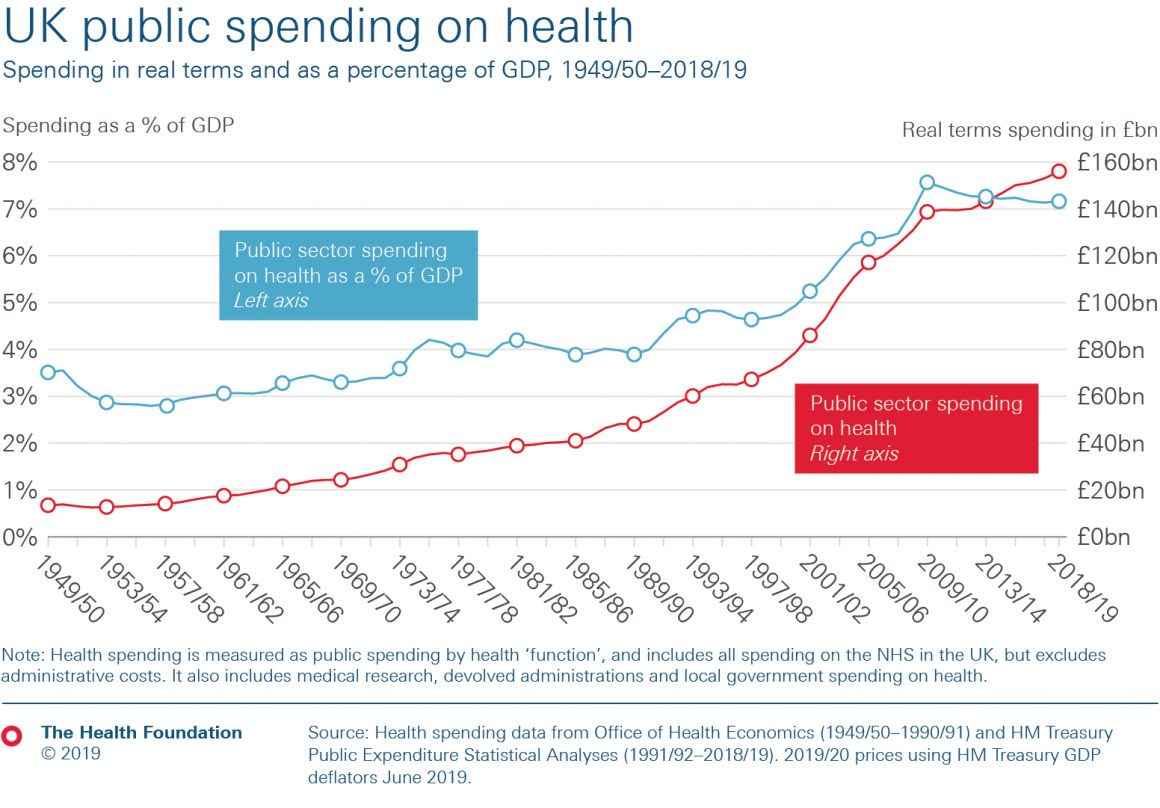
> After years of economic crisis, Portugal decentralized its drug oversight operation in 2012. A funding drop from 76 million euros ($82.7 million) to 16 million euros ($17.4 million) forced Portugal’s main institution to outsource work previously done by the state to nonprofit groups, including the street teams that engage with people who use drugs.